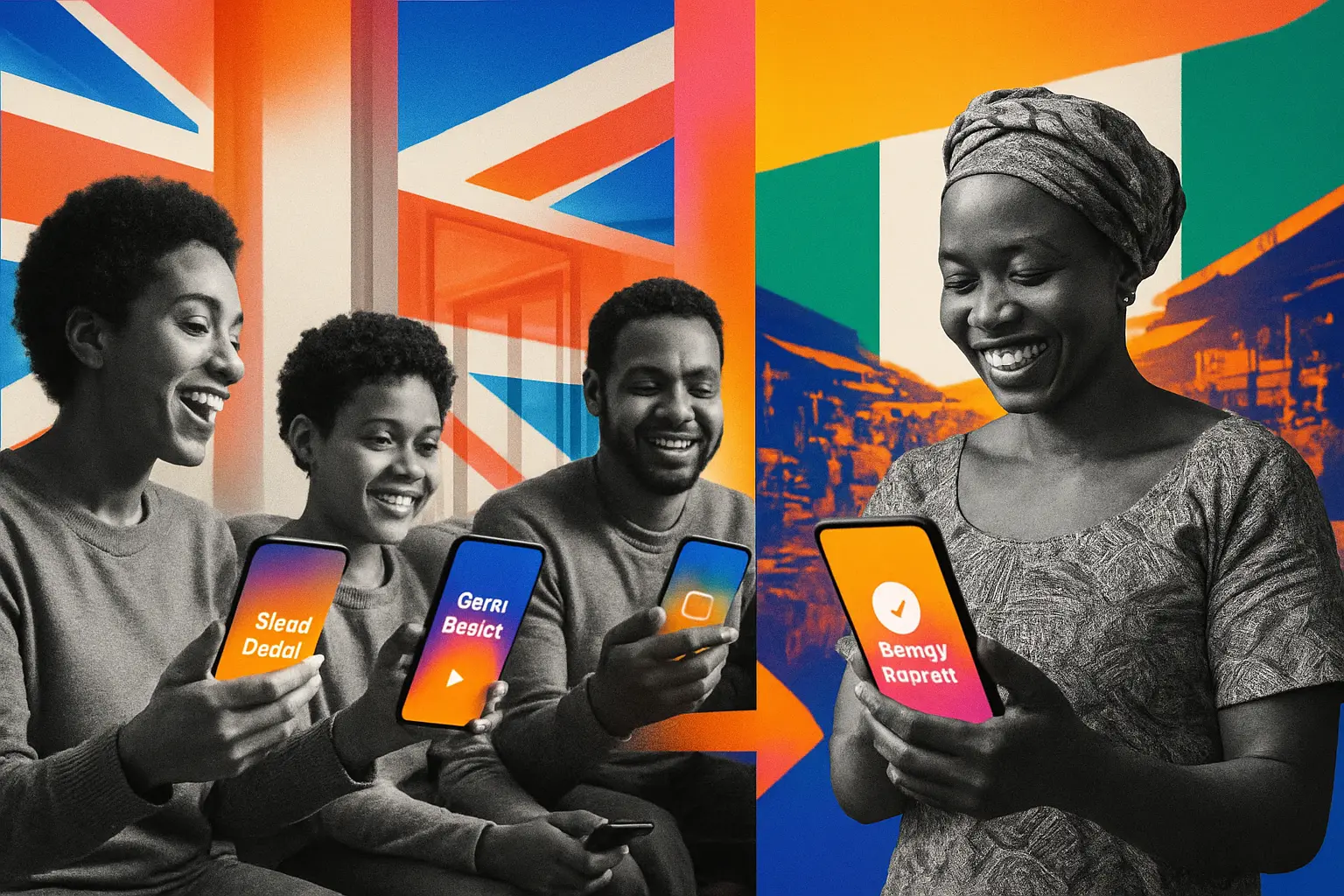
Sending pounds to Nigeria with confidence
If you send money home regularly, small fees can add up quickly. High street banks often bundle markups into the exchange rate, so you pay far more than you expect. Modern money transfer apps flip that on its head with transparent pricing, fair rates, and delivery in minutes to Nigerian bank accounts or cash pickup locations. Many are FCA regulated for UK users and partner with licensed providers in Nigeria, giving you bank-level security without bank-level costs.
You will see familiar names such as Wise, Remitly, TransferGo, and Revolut, plus UK-focused services like Roze Remit and MoneyTO. There are also Nigeria-specialist options including Africhange and Grey that prioritise instant delivery and sharp rates. Your choice should balance speed, total cost, and how your recipient wants to receive money. We will explain the options in plain English, so you can keep more naira in the family budget and less in fees.
The goal is simple: maximise what arrives in Nigeria while staying safe, fast, and fully compliant.
Who benefits most
This guide is for UK-based senders supporting family, covering tuition or medical costs, or paying for services in Nigeria. It suits first-time users wanting clarity and regular senders who need reliable, low-cost transfers. If your priority is speed, transparency, and strong consumer protection, the options below will help you choose confidently.
What you are actually paying for
When you send money internationally, there are two main costs: explicit fees and exchange rate margin. Banks often advertise low transfer fees but hide 3% to 6% in the rate, which can add £30 to £60 on a £1,000 transfer. Leading apps publish their fees upfront and use either the mid-market exchange rate or a clearly stated rate, so you can see the total cost before you press send.
Delivery methods vary. Bank deposit to Nigerian accounts is usually fastest and cheapest. Some providers also offer cash pickup for recipients who prefer to collect in person. A few services support instant or near-instant transfers with real-time tracking. Strong security is standard, including verification checks, 3D Secure card payments, and segregated client accounts in the UK. The result is a safer, simpler way to move money than relying on outdated bank wires.
How to send step by step
Start by comparing total cost: look at the rate you get and any fees. Create an account with your chosen app and complete a quick ID check using your passport or driving licence. Add your recipient’s full name and Nigerian bank details, including account number and bank name. Choose how the money should arrive - bank deposit is usually the quickest and best value - then pick a payment method such as UK bank transfer, debit card, or Apple Pay.
Most providers show an arrival estimate and the exact naira amount before you confirm. Many deliver in minutes, especially for bank deposits to major Nigerian banks. You can track the transfer in the app and receive a confirmation once delivered. If something changes, in-app support or live chat can help, and FCA-regulated firms must follow strict safeguarding rules to protect your money.
A clear on-screen quote and delivery time before you pay is a non-negotiable sign of a trustworthy service.
Why modern apps beat high street banks
The biggest win is cost. Traditional banks often bake in hidden rate markups that make them the least efficient choice for UK-to-Nigeria transfers in 2025. By contrast, leading apps use low, transparent fees and competitive rates that maximise what your recipient receives. Speed is the second win - many transfers arrive within minutes, not days.
Flexibility matters too. Services like Remitly support bank deposits and cash pickup, which is helpful when your recipient does not want to wait for a bank credit. Others, including Wise and TransferGo, excel on cost and consistency for frequent senders. UK-focused options such as Roze Remit and MoneyTO combine FCA regulation with helpful features like fee-free first transfers or live rate alerts. For tech-savvy senders, Africhange and Grey offer instant, digital-first experiences tailored to this corridor.
Quick compare: strengths and trade-offs
| Provider | Key pros | Considerations |
|---|---|---|
| Wise | Mid-market rate, low fees, deliveries in seconds to bank accounts | No cash pickup; fees vary by payment method |
| Remitly | Fast delivery, bank deposit or cash pickup, strong UK reputation | Express payments can cost more; rates can change by tier |
| TransferGo | Free transfers to many Nigerian banks, quick delivery | Intro offers vary; card payments may add cost |
| Africhange | Zero transfer fees, instant delivery, competitive rates | Newer name for some UK users; check supported payout options |
| MoneyTO | First two transfers fee-free, real-time tracking | Fees after promos apply; verify larger amounts ahead of time |
| Roze Remit | Zero fees, live rates, FCA and HMRC regulated with segregated accounts | Rate can move with market; app-first experience |
| Grey | Fully digital, fast GBP to NGN swaps and transfers | Fewer traditional payout choices; best for app-centric users |
| TalkRemit | No hidden fees, simple setup, cash pickup or bank | Costs can vary by corridor and payout type |
| Revolut | Low fees to Nigerian bank accounts, easy for existing users | Requires recipient bank details; cash pickup not typical |
| High street bank | Familiar brand, branch support | 3%-6% total costs, slow delivery, limited transparency |
Pitfalls to avoid
Focus on the total price, not just the headline fee. A low fee with a poor exchange rate still costs more overall. Double-check recipient details to avoid delays, especially account numbers and bank names. For larger amounts, complete verification steps in advance so your transfer is not held for checks. Keep an eye on transfer limits, weekend processing, and payout network status in Nigeria. Only use apps with clear security practices, segregated client funds, and UK authorisation where applicable. Finally, avoid public Wi-Fi when sending and enable two-factor authentication to protect your account.
Other ways to move money
- High street bank transfer - familiar but typically the most expensive and slowest.
- Cash pickup via remittance agents - useful for recipients without easy bank access, usually higher fees than bank deposit.
- Card-to-bank services - pay by UK debit card for speed, noting possible card processing fees.
- Bank transfer to fintech wallet - top up your app from a UK bank, then send to a Nigerian account for better rates.
- Couriering cash - not recommended for safety, legality, and lack of recourse.
- Crypto stablecoins - high risk for everyday remittances due to volatility, fees, and regulatory concerns.
Frequently asked questions
Q: What is the cheapest way to send £1,000 to Nigeria? A: Compare apps that use the mid-market rate and low, transparent fees. Services like Wise, TransferGo, Africhange, and Roze Remit often beat banks by a wide margin.
Q: How fast do transfers arrive? A: Many UK-to-Nigeria bank deposits arrive within minutes. Cash pickup can also be near-instant. If verification is pending or the bank is offline, it may take longer.
Q: Is it safe to use these apps? A: Choose FCA-regulated providers and those that safeguard client funds. In Nigeria, look for partners licensed by the Central Bank. Use two-factor authentication for added protection.
Q: Can I send to someone without a bank account? A: Yes. Providers like Remitly and TalkRemit support cash pickup. Confirm the pickup location, ID requirements, and operating hours with your recipient.
Q: Will I see the exact naira amount before I pay? A: Reputable services show the full quote upfront, including fees and the exchange rate, so you know exactly what your recipient will get.
How Switcha fits into your decision
Switcha helps you compare trusted UK-to-Nigeria transfer services in real time, focusing on what matters most: the rate you actually get, the fees you will pay, and how quickly the money lands. We cut through jargon and highlight safety features like FCA authorisation, safeguarding, and Nigerian licensing. Whether you need the absolute lowest cost for a regular monthly transfer or the fastest possible delivery for an urgent payment, we show clear, side-by-side options so you can decide with confidence. We do not hold your money - we point you to providers that do, with full transparency and practical guidance.
Important note
This article provides general information, not financial advice. Always check the latest fees, rates, limits, and regulation with your chosen provider before sending. If you are unsure, seek personalised guidance from a qualified professional.