A straightforward guide to cover for your minibus
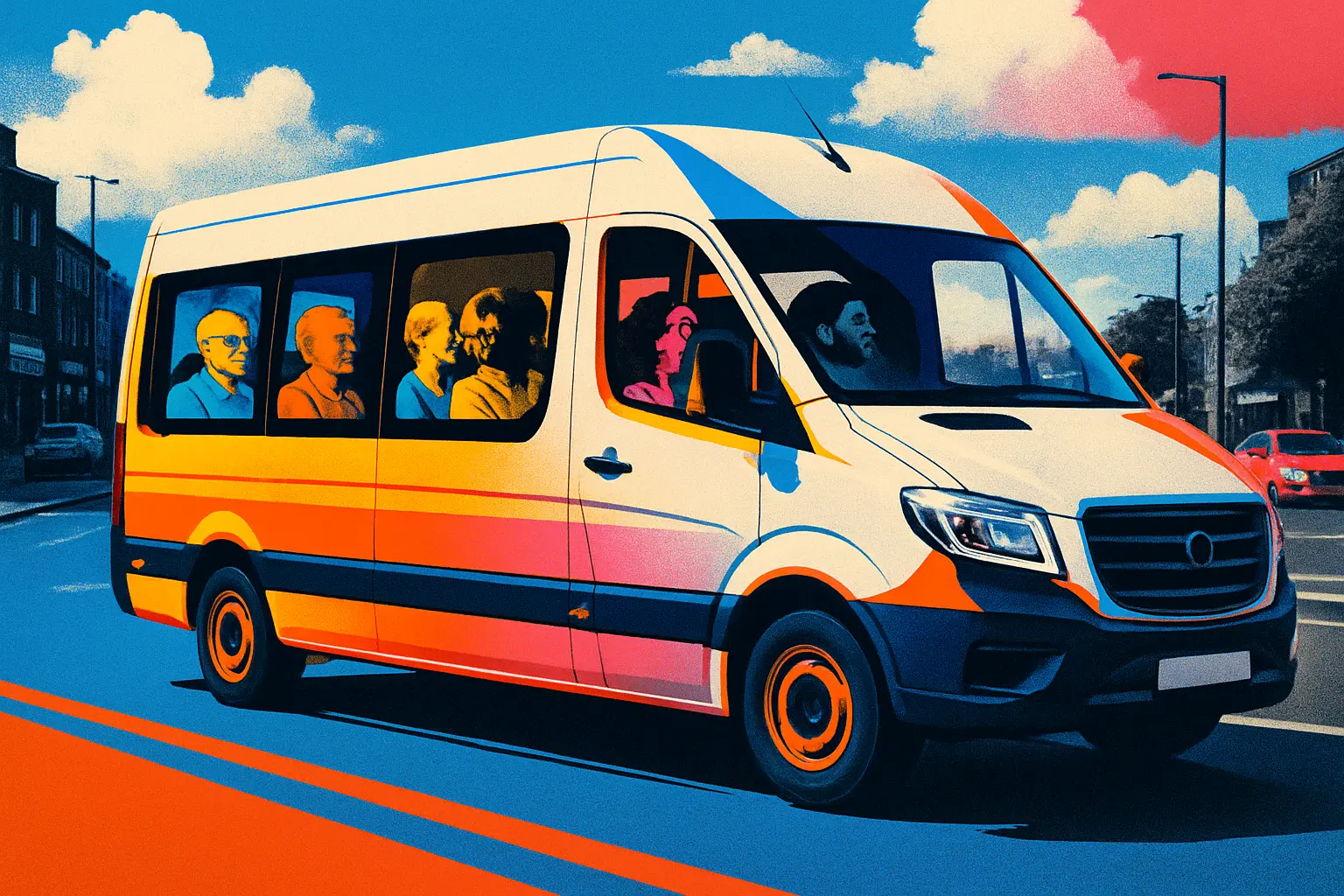
Minibus insurance protects vehicles with multiple passenger seats that carry groups for work, education, community transport or private hire. It combines road risk cover with passenger liability, reflecting the higher exposures involved in moving people rather than parcels. If you operate a school run, a care-home shuttle, an airport transfer, a sports club minibus or a church group vehicle, you will usually need specialist minibus cover rather than standard car or van insurance.
Premiums have been under pressure. Many UK motorists have seen broad motor insurance increases, and commercial and passenger vehicles have felt similar effects. Repair costs for newer vehicles have climbed due to advanced sensors and parts availability, which pushes claims higher. Business fleets have also faced more accidents and higher average claim values. At the same time, some parts of the market show relief, with competitive pricing in adjacent segments like vans hinting that shopping around can still uncover value.
This guide explains what is typically covered, how policies work, and which factors move your price up or down. We set out the differences between basic legal cover and wider protection like comprehensive, public liability and breakdown. We also cover practical steps such as driver training, proving a no claims bonus, fitting security, and choosing a vehicle in a lower insurance group. Our aim is simple - clear, calm information so you can make a safe, confident decision that fits your passengers, routes and budget.
Insurance can provide real financial protection. The key is knowing exactly what is covered - and what is not.
What is included and how a policy operates
Minibus insurance usually starts with third party only, which covers injury to others and their property if your driver is at fault. Most operators choose comprehensive cover that adds protection for your own vehicle if it is damaged by collision, fire or theft. Passenger liability is a core feature, reflecting the duty of care when moving people. Policies can extend to windscreens, audio and navigation equipment, and personal belongings within stated limits.
There are exclusions. Wear and tear, mechanical or electrical failure, and unsecured loads are commonly excluded. Using the vehicle outside the declared purpose - for example, carrying fare-paying passengers on a social-only policy - may void cover. Claims after an undeclared modification or when an unlicensed or unlisted driver is behind the wheel are also likely to be declined.
Claims are typically reported promptly with incident details, photographs and any third party information. Insurers may appoint approved repairers and arrange courtesy vehicles where included. Excesses apply, and no claims discounts can be protected on some policies for an additional cost. A practical example: if a trainee driver scrapes the vehicle on a narrow London street, comprehensive cover could repair your minibus after you pay the excess, while your no claims discount may step down unless protected.
Who genuinely benefits
Specialist minibus insurance is well suited to schools, academies and colleges transporting pupils, community transport providers, care homes, charities, sports and faith groups, and private hire or airport transfer operators. It is also relevant to businesses moving staff between sites, or hotels shuttling guests. Fleets with multiple minibuses can arrange cover under a fleet policy to simplify administration and align risk management.
If you occasionally carry small groups in a standard MPV for social use, a car policy with the correct seating declaration might be more appropriate. Equally, if the vehicle is used purely off road on private land, minibus insurance may not be required. The right approach is to match the policy to the seating capacity, usage, drivers and passenger risk you actually have.
Choosing your level of protection
-
Third party only
- Meets the legal minimum for road use. Covers injury and damage to others.
- Does not cover your own minibus for damage, theft or fire.
- Suitable only where budget is tight and vehicle value is low.
-
Third party, fire and theft
- Adds cover if your minibus is stolen or damaged by fire.
- Still excludes accidental damage to your own vehicle.
- A middle ground for older vehicles in lower risk areas.
-
Comprehensive
- Includes accidental damage to your minibus plus third party, fire and theft.
- Often adds windscreen cover and audio equipment limits.
- Widely chosen by operators that cannot afford vehicle downtime.
-
Public liability extension
- Covers injury or property damage claims from passengers off the road, such as slips while boarding.
- Essential for community and commercial operators.
-
Employers’ liability (where applicable)
- Required if you employ drivers or escorts. Covers injury claims by staff.
-
Breakdown and onward travel
- Roadside assistance, recovery and passenger continuation. Helpful for time-critical routes.
-
Legal expenses and uninsured loss recovery
- Contributes to legal costs after non-fault incidents and helps recover losses like excesses.
-
Personal accident and medical expenses
- Fixed benefits for specified injuries to the driver or passengers.
Tip: Confirm seating capacity, usage class and whether private hire is included. Misstating these can invalidate claims.
What it costs and the drivers of price
| Item | Typical impact on premium | Notes |
|---|---|---|
| Region | High in dense urban areas | London often higher. Wales tends to be lower. |
| Vehicle group rating | Lower groups usually cost less | Vans and minibuses sit roughly in groups 21-50. |
| Cover level | Comprehensive costs more than TPO | Add-ons like liability and breakdown increase price. |
| Driver age and experience | Younger or inexperienced drivers cost more | Driver shortages increase reliance on higher risk profiles. |
| Claims history and NCB | Clean records can reduce costs by over 50% | Protecting NCB can limit future rises after a claim. |
| Vehicle technology and repair costs | Higher tech increases repair spend | Repair costs have risen significantly since 2020. |
| Annual mileage and usage | Frequent, urban or hire use costs more | School, charity or hire work rated differently. |
| Market conditions | Prices can vary by insurer | Some cut rates while others increase them. |
Premium levels move with market trends. Broad motor premiums rose recently, affecting commercial and passenger vehicles. Conversely, some van premiums have fallen in parts of the UK, signalling potential competition and opportunities to compare quotes for minibuses. Fleet claims remain costly, so risk management directly influences price.
Who can apply and what insurers check
Insurers typically accept applications from UK-based operators with a valid V5C logbook, correct minibus classification and drivers who meet licence requirements for the vehicle size and passenger count. You will be asked to declare usage, seating capacity, typical routes, security arrangements and prior claims. Proof of no claims bonus may be required, along with driver licence checks and, for fleets, a risk management overview.
Applications may be declined where there is a history of non-disclosure, multiple recent at-fault claims, serious convictions, high theft risk without adequate security, or if the vehicle has undeclared modifications. Operators using inexperienced temporary drivers can still be covered, but expect tighter terms, higher excesses or training requirements. Being precise and consistent with information helps avoid delays and ensures cover reflects your real-world risk.
From quote to claim - simple steps
- Gather details on vehicle, seating, usage, drivers and mileage.
- Get multiple quotes and compare cover limits, excesses and exclusions.
- Choose a cover level that matches your passengers and routes.
- Confirm optional add-ons like breakdown, liability and legal expenses.
- Disclose claims, convictions and modifications accurately.
- Purchase the policy and store documents digitally and in the vehicle.
- Implement driver training and security to reduce risk and cost.
- If an incident occurs, report promptly with photos and witness details.
Weighing it up - benefits and trade-offs
| Pros | Cons | Key considerations |
|---|---|---|
| Protects passengers and third parties financially | Premiums have risen with repair and claim costs | Compare multiple insurers as pricing varies across the market |
| Comprehensive cover limits downtime after accidents | Urban operators face higher regional pricing | London often higher while some regions are lower |
| Tailored options for charities, schools and hire use | Exclusions apply for undeclared use or drivers | Keep usage, seating and driver lists accurate |
| No claims discounts can materially cut costs | Claims or inexperienced drivers increase premiums | Training and retention reduce incident frequency |
| Fleet options simplify multi-vehicle management | Higher tech vehicles cost more to repair | Consider total cost of ownership, not just premium |
Key checks before you commit
Review the schedule for seating capacity, usage class and any driver restrictions, including age and licence types. Confirm excesses for accidental damage, windscreen and theft, and whether different excesses apply to young or new drivers. Check limits for passenger liability, personal belongings and audio equipment. Look closely at exclusions for undeclared modifications, hire use and business activities outside the stated purpose. Understand how your no claims discount is treated at renewal after a claim, and whether protection is included. Finally, keep documents such as proof of NCB, driver licence checks and maintenance records readily available.
Alternatives and related policies
- Public liability insurance - For organisations that need broader liability beyond the vehicle, such as events or premises.
- Fleet insurance - Suitable for businesses operating multiple vehicles, allowing centralised admin and risk control.
- Commercial van insurance - If you carry goods rather than passengers, a van policy may fit better.
- Taxi or private hire insurance - Required if the vehicle takes fare-paying passengers under hire and reward.
- Short-term motor insurance - Useful for temporary drivers or seasonal activities without changing the main policy.
Frequently asked questions
Q: Do I need specialist insurance for a 9 to 17 seat vehicle? A: Yes. Vehicles carrying multiple passengers typically require minibus insurance or a specific class of use. Policies reflect passenger risk and often include liability features not found in car cover.
Q: Why are premiums higher in cities like London? A: Urban areas usually have more traffic, higher accident frequency and increased vehicle crime. These risk factors translate into higher premiums compared with rural or lower risk regions.
Q: Can a no claims bonus reduce my price significantly? A: A long claim-free record can lead to substantial discounts. Maintaining and proving your no claims history is one of the most effective ways to manage costs over time.
Q: How do newer vehicle technologies affect cost? A: Advanced sensors and safety systems can be expensive to repair, which increases average claim values. That added cost pressure often results in higher premiums for newer minibuses.
Q: Will using trainee or temporary drivers increase my premium? A: Insurers usually price for experience. Less experienced drivers tend to have more incidents, so premiums and excesses can be higher. Training and supervision help mitigate this.
Q: Are prices the same across insurers? A: No. Insurers assess risk differently. Some may reduce rates while others raise them, so shopping around and comparing the same cover limits and excesses is important.
What to do next
Take stock of your passengers, routes, driver experience and vehicle value. Gather accurate information, then compare several quotes side by side, focusing on limits, exclusions and total excesses. If anything is unclear, ask the insurer to confirm in writing. Move forward when you feel confident the cover matches how you actually operate.
Important information
This guide provides general information only and is not personal financial advice. Policy terms vary by insurer. Always read your schedule, wording and endorsements carefully and confirm any points in writing before you buy.