Your comprehensive insurance paperwork, decoded and simplified
Get fully comprehensive cover right the first time. This guide explains the UK documents you must have, what each one proves, and how to use them to secure a fair quote and stress-free claims.
Why this matters for UK drivers
If your documents are incomplete or inaccurate, you risk cancellations, claim refusals, and penalties at the roadside. Understanding the paperwork means you can prove your cover, avoid disputes, and keep driving legally with confidence.
Who should use this checklist
- New drivers arranging first-time cover
- Experienced motorists switching providers for a better deal
- Households adding named drivers to one policy
- Anyone preparing for renewal or planning a claim
Small errors can cost big. Accurate disclosure protects your premium and your rights.
The essentials, in plain English
Key documents that form your contract
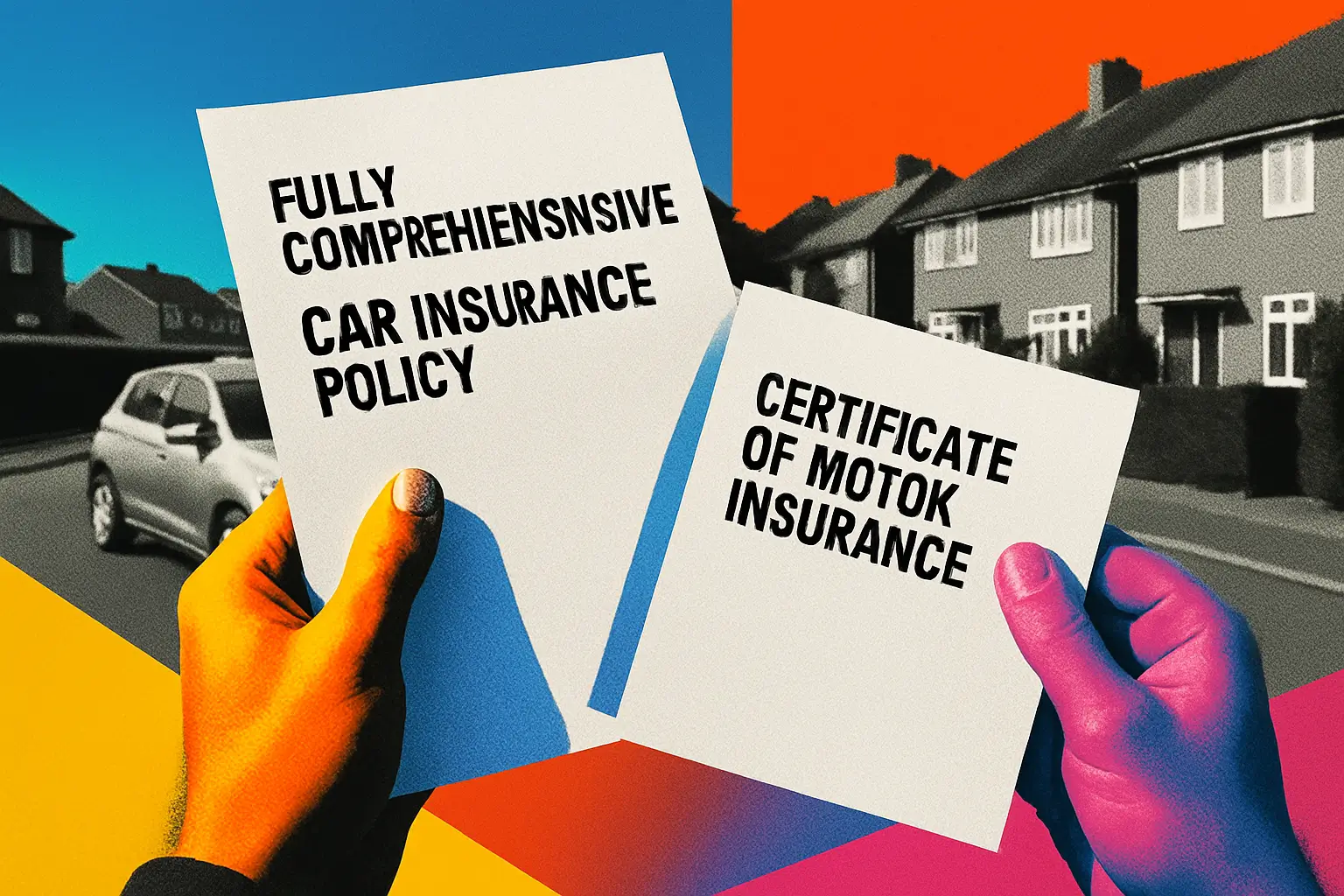
- Certificate of motor insurance - Legal proof of minimum cover, who can drive, permitted use, and cover dates.
- Policy schedule/document of car insurance - Your specific cover, excesses, endorsements, optional add-ons, and vehicle details.
- Personal details and driver information - Policyholder and named drivers, claims history, convictions, payment responsibilities, and conditions like approved repairers.
- Policy booklet and terms - The rules: limits, exclusions, claims procedures, and how to complain or cancel.
These together form your legally binding agreement. Keep them accessible in print or digital form.
What insurers need for a valid quote
- Vehicle facts - Registration, make, model, year, value, modifications, annual mileage.
- Your details - Name, age, address, occupation, licence type, how long licensed in the UK.
- Driving history - No claims discount years, previous claims, accidents, and any motoring convictions or points.
- Other drivers - Full details for all named drivers.
- Security and parking - Where the car sleeps and what devices protect it.
Accurate disclosure ensures the right price and prevents claim disputes.
Documents and what they prove
| Document | What it confirms | When you need it | Legal relevance |
|---|---|---|---|
| Certificate of motor insurance | Minimum legal cover, who can drive, permitted use, cover dates | While driving and at roadside checks | Required under UK law to prove insurance |
| Policy schedule/document | Exact cover, excesses, endorsements, add-ons, vehicle details | Buying, renewing, and when claiming | Forms part of the contract |
| Personal details and drivers | Named drivers, claims record, responsibilities, repairer rules | Policy setup and claims | Clarifies who is covered and on what terms |
| Policy booklet and terms | Limits, exclusions, claims steps, complaints process | Before purchase and during claims | Sets obligations and rights |
| Claims evidence bundle | Incident details, third party info, witnesses, photos | After an accident or loss | Supports fair and prompt settlement |
Carry your certificate or have quick digital access. Police can request proof on the spot.
Choosing cover features that work for you
Comprehensive policies can differ despite the name. Compare the following:
- Excess levels - Voluntary and compulsory excesses change your premium and claim cost.
- Courtesy car - Often included but may depend on approved repairers.
- Windscreen cover - Saves hassle and NCD impact for chips and cracks.
- Personal belongings - Limits vary; check for exclusions on tech and tools.
- Breakdown and legal expenses - Sometimes bundled, sometimes optional.
- European cover - Usually limited; confirm days and territorial scope.
- Keycare and misfuelling - Niche add-ons that can be useful for some drivers.
When comparing, match the schedule, endorsements, and booklet to your actual use. For example, commuting, business use, or ridesharing must be declared to remain covered.
Price, impact, and potential savings
- Premium drivers - Vehicle value, repair costs, postcode risk, age, occupation, mileage, and driving record.
- Security and parking - Garage, driveway, alarms, immobilisers, and trackers can lower risk and cost.
- No claims discount - Protecting it may increase the premium slightly but preserves long-term savings.
- Modifications - Performance or cosmetic changes often raise premiums and can limit eligibility.
- Misrepresentation risk - Incorrect details can invalidate cover and lead to claim refusal.
Focus on total cost of ownership: premium, excess at claim time, and the value of included benefits.
Who typically qualifies and why it matters
Eligibility varies by insurer, but you will generally need:
- A valid UK driving licence and correct use class declared.
- Full disclosure of claims, accidents, and motoring convictions within required timeframes.
- Accurate details of all named drivers who use the vehicle.
- Correct vehicle information including registration, modifications, and security.
- Compliance with conditions like approved repairers and reporting timescales.
Some insurers decline high-performance modifications, frequent claims, or certain occupations. If in doubt, ask before you buy.
From quote to cover - step-by-step
- Gather vehicle, driver, and driving history documents.
- Get quotes using accurate data across several providers.
- Compare schedules, excesses, and exclusions line by line.
- Confirm security and overnight parking arrangements truthfully.
- Select cover and optional add-ons that match your needs.
- Pay and receive certificate, schedule, and policy booklet.
- Store documents safely and enable digital access on phone.
- Review details within cooling-off period and correct errors.
Weighing the upsides and trade-offs
Pros:
- Broad protection for accidental damage, theft, fire, and vandalism.
- Often includes windscreen cover and courtesy car provision.
- Better alignment with newer or higher-value vehicles.
Cons:
- Higher premiums than third party-only policies.
- Exclusions and endorsements vary and can surprise at claim time.
- Excess levels may reduce smaller claim payouts.
Balanced view: choose comprehensive for peace of mind, but scrutinise the schedule and booklet so there are no surprises.
Pitfalls to avoid before you buy
- Low-ball quotes - If the details are wrong, the policy can be cancelled later.
- Undeclared drivers - Letting someone drive who is not named jeopardises claims.
- Wrong use class - Commuting or business use not declared can void cover.
- Missed deadlines - Late claim notification can reduce or refuse payouts.
- Evidence gaps - No photos, witness details, or incident reference slows claims.
Accuracy beats speed. Take five minutes to get the details right.
If comprehensive is not the right fit
- Third party, fire and theft - Cheaper, covers others plus theft and fire of your car.
- Third party only - Minimum legal cover, highest risk to your own finances.
- Telematics policies - Potential savings for safe or low-mileage drivers.
- Short-term policies - Useful for temporary vehicles or occasional drivers.
Match cover to your risk tolerance, car value, and annual mileage.
FAQs that clear common confusion
-
Do I legally need comprehensive insurance to drive? No. UK law requires at least third party cover. Comprehensive is optional but offers the widest protection for your own vehicle.
-
Must I carry my certificate while driving? Yes, you should carry it or have instant digital access. Police can require proof and penalties may apply if you fail to provide it when asked.
-
What happens if I make a mistake on my quote? If material information is wrong, the insurer can change your premium, cancel the policy, or refuse a claim. Correct errors immediately.
-
Will my no claims discount transfer between insurers? Usually, yes. Provide proof of your NCD years. Some limits and timeframes apply, so keep your confirmation letters.
-
Are modifications always a problem? Not always. Safety and manufacturer-approved upgrades may be fine, but performance changes often raise premiums or restrict eligibility. Always declare them.
-
Do I need to list every driver? Yes. Anyone who uses the car regularly should be named. Occasional drivers may need temporary cover if not on the policy.
What to do now
- Gather your documents: licence, registration, NCD proof, claims history.
- Get like-for-like quotes and compare schedules and exclusions.
- Choose suitable add-ons, confirm details, and store your documents safely.
Next step suggestion: Review your current certificate and schedule today to ensure names, vehicle details, and cover dates are accurate.
Important information
This guide provides general information for UK motorists. Policies vary by insurer and individual risk. Always read your policy schedule and booklet, and seek independent advice if you are unsure about cover or eligibility.
Claims-ready checklist
- Certificate of motor insurance
- Policy schedule and policy booklet
- Incident date, time, location, and description
- Third party and witness details with contact numbers
- Photos of damage, weather, and road layout
- Crime reference number for theft or vandalism