A steady guide to protecting farm vehicles
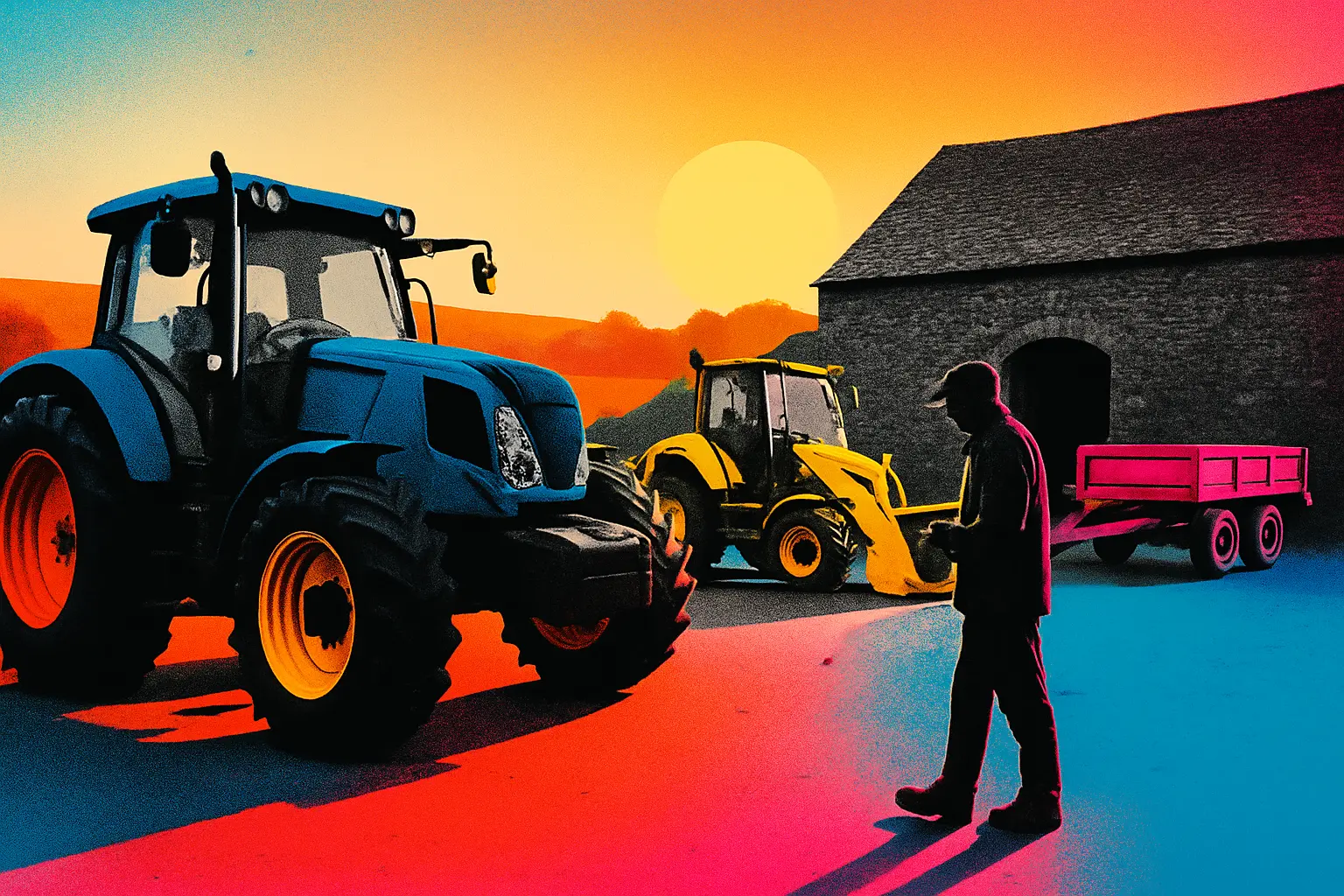
Agricultural vehicle insurance covers tractors, telehandlers, ATVs, UTVs, pickups used for farm work, and specialist trailers and horseboxes. It exists to protect your working kit on the road and on the farm, and to help you meet legal duties where road use applies. For many farmers, these vehicles are the backbone of day-to-day operations, so an insurance gap can quickly become a business interruption.
In Great Britain, typical annual premiums for agricultural motor insurance often fall between £500 and £1,500 per vehicle. Costs vary by vehicle type, usage, security, and driver profile. Vehicles used only on private land are usually cheaper than those frequently driven on public roads. Multi-vehicle policies and improved security can help control costs while keeping appropriate protection in place.
Agriculture remains one of GB’s most hazardous industries, with recent HSE figures reporting 23 fatalities in agriculture, forestry, and fishing in 2024/25. That high risk environment means accidents, fires, and thefts do happen, and claims can be large. Farm fire claims alone are estimated at £102 million across the UK, with increasing costs in some northern regions. Insurance can provide practical support such as recovery, repairs, replacement, and sometimes legal or risk management services that help you get back to work safely and compliantly.
This guide explains what is typically covered, where the limits sit, and how to buy sensibly. It avoids jargon, sets realistic expectations, and focuses on helping you weigh your options so you can choose cover that fits your vehicles, your people, and your budget.
Insurance should fit the way you farm - not the other way round.
What is covered and how it works in practice
Most agricultural vehicle policies are built around three pillars: liability for road use, damage or loss to the vehicle, and added protections for tools or attachments. Third party liability is required for road use, covering injury or damage you cause to others. Comprehensive policies add cover for your vehicle if it is stolen, vandalised, or damaged in an accident or fire. Many include windscreen cover, recovery, and a pathway to temporary replacement so operations can continue.
Cover often extends to trailers, mounted implements, loaders, and sometimes personal effects, though limits apply. Vehicles used solely on private land can be insured for off-road risks only, which usually costs less. If you run multiple vehicles, an agricultural fleet approach can simplify administration and save money.
Claims typically start with reporting the incident, sharing proof such as photos, driver details, and police references for theft. Assessors confirm the policy terms and arrange repairs or settlement. For example, if a telehandler is damaged while loading bales and the incident is accidental, comprehensive cover may fund repairs subject to the excess. If the driver was unlicensed for that category, cover may not respond. Likewise, using a vehicle for paid work outside the declared farm activities can fall outside scope. Being transparent about use, drivers, and security at the outset reduces surprises later.
Who benefits most
This cover suits farmers, smallholders, contractors, and rural businesses operating tractors, ATVs, side-by-sides, pickups, horseboxes, and specialist plant used for agriculture. It is particularly valuable for farms with regular road use, higher-value machinery, or exposure to theft and fire risks. Diversified farms that host visitors, run farm shops, or offer equestrian activities often see more complex movement of vehicles and trailers, making robust cover important.
If your vehicle never leaves private land, an off-road policy may be sufficient and cheaper, provided the use is accurately declared. Where a vehicle is seldom used, you might still need at least third party cover for any planned road journeys. If you hire in machinery rarely, check whether the hire company’s insurance meets your needs before buying extra cover.
Choosing a level of protection
- Third Party Only
- Meets minimum road-legal liability. Covers injury or damage you cause to others.
- No cover for your own vehicle. Suits limited road use and lower-value vehicles.
- Third Party, Fire and Theft
- Adds protection if your vehicle is stolen or damaged by fire.
- Still excludes accidental damage to your vehicle. Useful where theft risk is elevated.
- Comprehensive
- Includes accidental damage to your vehicle alongside third party, fire and theft.
- Often adds windscreen cover, recovery, and personal effects limits.
- Agricultural Fleet/Multi-vehicle
- One policy for several vehicles with named or any-driver options.
- Easier admin and potential discounts. Make sure driver criteria are practical.
- Optional add-ons
- Hired-in plant cover for short-term machinery use.
- Legal expenses to handle disputes and recovery of uninsured losses.
- Breakdown and roadside assistance suitable for rural routes and heavy kit.
- Increased limits for attachments, tools, and GPS equipment.
- Courtesy or hire vehicle extensions to reduce downtime.
Pick the level that mirrors real-world use - road miles, drivers, and value at risk.
Costs and what drives your premium
Typical annual costs in GB: often £500 to £1,500 per agricultural vehicle. Actual premiums vary.
| Factor | Typical effect on price | What to expect |
|---|---|---|
| Vehicle type and value | Higher value costs more | Tractors and telehandlers rated above ATVs |
| Usage and road miles | More road use increases risk | Private-land only often cheaper |
| Drivers and experience | Younger or inexperienced drivers cost more | Any-driver widens risk, raises price |
| Security measures | Better security can reduce premiums | Trackers, immobilisers, locked barns |
| Location and claims trends | Higher local claims increase cost | Some northern regions seeing higher fire claims |
| Cover level | Comprehensive costs more than TPO | Add-ons add incremental cost |
| Claims history | Recent claims raise premiums | Clean records help control price |
Prices are indicative, not guaranteed. Insurers rate risks individually.
Who can apply and what insurers check
Most UK farmers, smallholders, and rural contractors can apply, provided vehicles are correctly registered where required, road-legal for public highways, and maintained to a safe standard. Insurers usually ask for proof of ownership, vehicle identification, mileage and use patterns, garaging location, driver details and licences, and any security installed, such as immobilisers or trackers. For fleets, an overview of risk management and servicing schedules is useful.
Common reasons for decline include undisclosed modifications, previous policy cancellations, unspent motoring convictions not declared, or using vehicles for activities outside the scope of agriculture without telling the insurer. If a vehicle is used purely off-road, confirm this and ensure the policy matches. Keep documents such as V5C, operator manuals, maintenance records, and any finance or lease agreements ready to speed up acceptance.
From quote to claim in clear steps
- Gather vehicle, driver, and usage details with proof of ownership and security.
- Get multiple quotes specifying road use, private land use, and attachments.
- Compare cover limits, exclusions, excesses, and any-driver conditions.
- Choose add-ons like breakdown, legal expenses, or hired-in plant if needed.
- Purchase and set start date, checking immediate needs like harvest peaks.
- Store documents securely and follow maintenance and security commitments.
- If an incident occurs, report quickly, document evidence, and follow guidance.
Advantages and trade-offs to weigh
| Pros | Cons or limitations |
|---|---|
| Meets legal liability for public road use | Off-road only policies do not cover public roads |
| Protects against theft, fire, and accidental damage | Excess applies and can be higher for young drivers |
| Multi-vehicle policies simplify admin and can save money | Any-driver terms may increase premiums |
| Tailored to farm kit, implements, and horseboxes | Some attachments or tools need specified limits |
| Access to recovery, legal support, and risk guidance | Wear and tear, poor maintenance, and gradual damage excluded |
| Flexible options for diversification activities | Misdeclared use can invalidate claims |
| Security discounts encourage theft prevention | High-risk locations may still face elevated premiums |
Key checks before you buy
Confirm the excess for each section, including windscreen and theft, and understand how voluntary and compulsory excesses stack. Review exclusions for wear and tear, mechanical failure, unapproved modifications, or use outside agriculture. Check limits for tools, GPS, and attachments, as these can be lower than the vehicle sum insured. Ask about any waiting periods on add-ons such as breakdown. Consider renewal pricing and whether no-claims discounts apply or are protected. Finally, ensure you have the documents to prove ownership, driver eligibility, maintenance, and security arrangements, as these will be important if you need to claim.
Related covers to consider
- Farm combined insurance - Broader protection for buildings, livestock, machinery, and liabilities across the farm.
- Public and products liability - Useful if you host visitors, sell produce, or run workshops.
- Employers’ liability - Required if you employ staff or use volunteers in certain circumstances.
- Business interruption - Helps with lost income after insured damage or access restrictions.
- Tools and equipment cover - Higher limits for portable kit and precision GPS systems.
- Horsebox and equine cover - Specialist policies where equestrian activities are central.
Frequently asked questions
Q: Do I need insurance if I only drive my tractor on the farm?
A: If it never goes on a public road, insurers can offer off-road cover that excludes road use. If you plan any road journeys, at least third party cover will be needed for those trips.
Q: Are young or seasonal drivers covered?
A: They can be, but premiums and excesses are usually higher. Insurers may require minimum age or experience and may restrict any-driver terms. Declare all likely drivers at quote stage.
Q: How can I reduce my premium without cutting vital cover?
A: Improve security with trackers and immobilisers, store vehicles in locked barns, limit any-driver where practical, and consider a multi-vehicle policy. Accurate declarations and clean claims records also help.
Q: What if my farm has diversified into glamping or retail?
A: Diversification can change risk. Tell your insurer about new activities and vehicle use. You may need extensions or a wider farm combined policy to keep cover aligned with operations.
Q: Are attachments and tools automatically covered?
A: Often there is some cover, but limits can be modest. High-value implements, GPS, or specialist tools may need specified sums insured or separate sections. Check the schedule carefully.
Q: What happens after a fire or theft?
A: Report it promptly, provide evidence such as photos and police references, and follow the claims handler’s instructions. Comprehensive policies typically cover repairs or settlement subject to excess and policy terms.
What to do next
Take a moment to list your vehicles, drivers, and how you actually use each machine. Compare a few quotes like for like, checking exclusions, excesses, and limits rather than focusing only on price. When you are ready, choose the cover that reflects real usage and keeps your operation moving.
Important note
This guide provides general information, not personal financial advice. Policy terms, limits, and eligibility vary by insurer. Always read the policy wording and schedule carefully and seek professional guidance if you are unsure about suitability for your circumstances.