A straightforward guide for busy takeaway owners
Insurance for takeaways protects your premises, equipment, stock and legal liabilities when things go wrong. In plain terms, it can help pay for repairs after a fire, replace spoiled stock, and defend you if a customer or employee makes a claim. With the UK takeaway market valued at roughly £33.7bn and growing, more shops are managing higher order volumes and delivery demand. That growth adds risk, so understanding what cover you need is essential.
Typical annual costs sit around £560 in 2025, but prices vary widely. Small operators might see premiums from roughly £166 to over £1,700 depending on location, cooking methods, and the level of cover chosen. Employers’ liability is a legal requirement if you have staff and often adds about £400 to a small shop’s premium. Delivery operations bring extra exposures that standard policies may not include, so knowing where the gaps are matters.
This guide sets out the key covers, limitations and how claims work, reducing jargon and false assumptions. You will find practical examples and transparent notes on exclusions so you can compare policies on a like-for-like basis. We will not promise the cheapest price or a perfect outcome. Instead, we will help you make calm, informed decisions that suit your budget and risk profile.
Insurance can protect cashflow when incidents disrupt service, but only if the cover matches how you actually operate.
What is covered in practice
Most takeaway policies combine property protection for fixtures, fittings, business contents and stock with legal liability covers. Public liability helps if a customer slips, trips or alleges injury. Product liability responds to food-related claims such as allergic reactions or food poisoning. Employers’ liability protects you if an employee is injured at work. Many packages offer optional extensions for money, signage, glass and legal expenses. Business interruption cover can replace lost income if you must close after an insured event like a fire or flood.
There are limits. Standard policies may exclude delivery, riders’ vehicles, late delivery penalties or cyber incidents unless you add specialist cover. Deep fat fryers and solid fuel cooking increase fire risk and can push premiums up. Insurers expect clear food safety processes, temperature logs and extraction maintenance. If you do not follow policy conditions, claims may be reduced or declined. For example, leaving the premises unattended with fryers on could breach a warranty. Claims usually start with notification to your insurer or broker, followed by evidence such as CCTV, photos, HACCP records and maintenance invoices. Where liability is alleged, your insurer will typically handle legal defence and negotiate settlements within policy limits and excesses.
Who benefits most
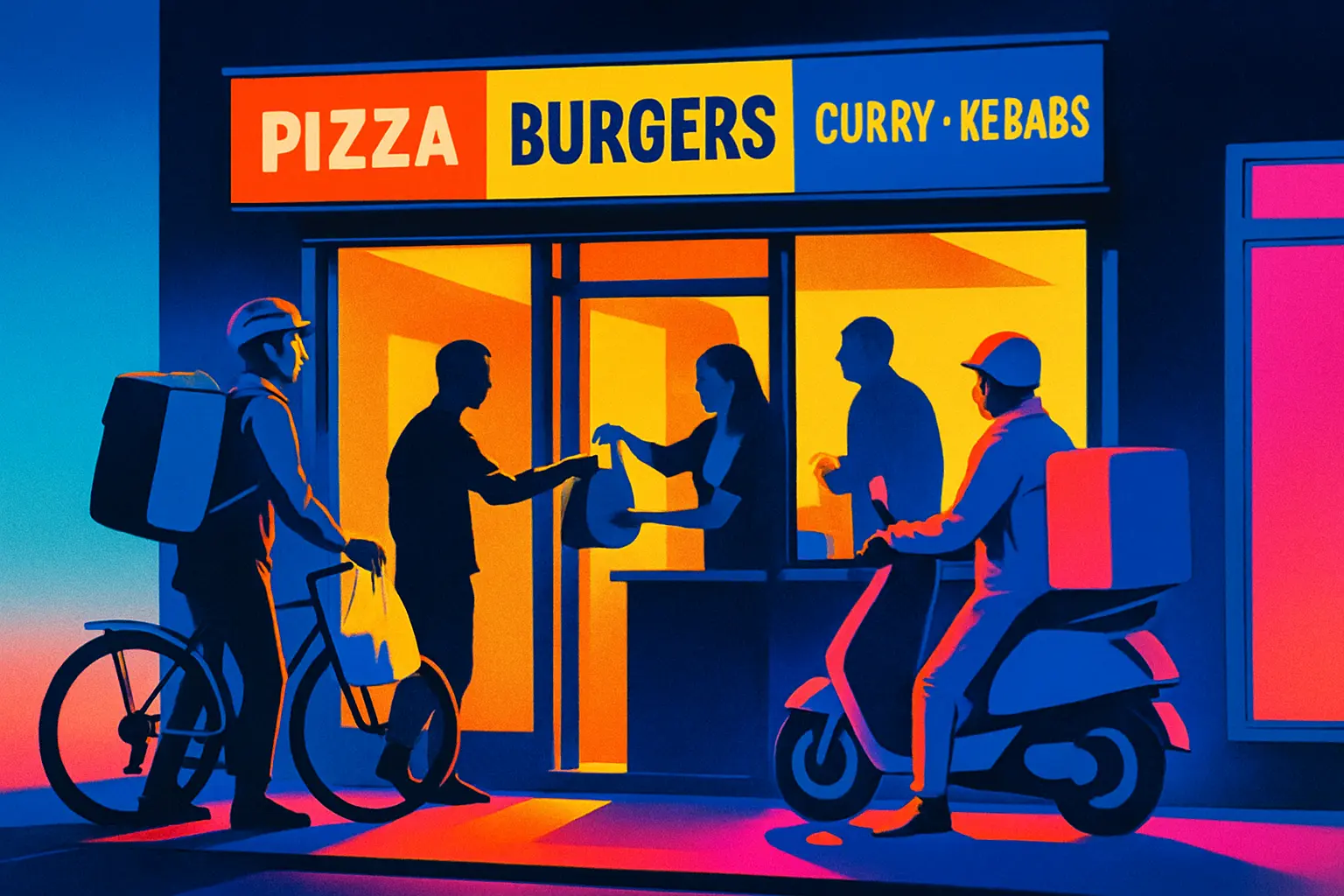
This cover suits independent takeaways, quick-service outlets, dark kitchens and small chains serving cuisines from fish and chips to pizza and Chinese. It is particularly useful for businesses that handle hot oil, use commercial fryers, have dine-in waiting areas, operate late hours or offer delivery. London and other urban operators with high footfall gain from strong liability and interruption cover as incidents can escalate quickly.
It may be less essential for hobby operators who sell food occasionally from home without employees and with limited turnover, although cottage food rules still apply and public liability can be prudent at events. If your landlord’s policy already includes certain property protections, you might adjust your own cover, but do not rely on a building policy to protect your stock, trade equipment or liabilities.
Choosing your protection level
-
Basic package
- Core: Public liability, product liability, small contents and stock limits.
- Suitable for: Low footfall, minimal equipment, no employees, no delivery.
- Trade-off: Lower premiums but tighter limits and more exclusions.
-
Standard package
- Core: Public and product liability, contents, fixtures, stock, business interruption.
- Typical extras: Money, glass, signage, legal expenses.
- Suitable for: Most high-street takeaways with consistent trading hours.
-
Comprehensive package
- Core: Higher limits across property and liabilities, robust business interruption.
- Specialist options: Deterioration of stock, equipment breakdown, cyber.
- Suitable for: Busy shops, multi-site operators, higher revenues.
-
Delivery add-ons
- Driver liability gaps: Standard shop insurance rarely covers delivery activities.
- Options: Goods in transit for food, hired-in riders’ liability via specialist policies, rider personal accident, contingent motor for non-owned vehicles where available.
-
Risk-specific extensions
- Deep fat fryers and extraction: Enhanced fire protections, increased cleaning requirements.
- Seasonal uplift: Temporary higher stock limits during peak periods.
- Tenancy improvements: Cover for fit-out you paid for in leased premises.
Match cover to real-world operations first, then refine for budget control.
What it costs and why prices differ
| Item | Typical figures in 2025 | How it affects price | Notes |
|---|---|---|---|
| Overall annual premium | Around £560 average | Baseline | Range from ~£166 to £1,700+ depending on risk profile |
| Employers’ liability | ~£400 for small shops | Increases cost | Legally required if you employ staff |
| Delivery exposure | Variable | Often increases cost | Standard policies may exclude delivery without specialist add-ons |
| Deep fat fryers | +£70 to £130 | Increases cost | Higher fire risk and maintenance requirements |
| Location | Variable | Can increase or reduce | Urban, high-crime or flood areas cost more |
| Cover limits | Variable | Higher limits cost more | Check business interruption indemnity period |
| Claims history | Variable | Claims may increase | Clean histories often get better terms |
| Market conditions | Softening in 2025 | May reduce | Competition and capacity can lead to buyer-friendly rates |
| Daily equivalent | From ~£1.94 per day | Context only | Actual premiums depend on underwriting |
Prices here are indicative, not guarantees. Insurers individually rate each risk.
Who is eligible and what insurers ask for
Most UK takeaways trading legally can apply. Insurers usually require your trading address, business description, turnover and wage roll, cooking methods, opening hours and security measures. You may be asked for food safety documentation such as HACCP records, cleaning logs, extraction maintenance schedules and evidence of staff training. Landlord or lease requirements can also shape minimum cover levels, particularly for property and glass.
Common reasons for decline include incomplete disclosures, unmanaged fire risks, poor maintenance of ducting or fryers, a history of frequent claims or unspent convictions relevant to insurance. If you operate delivery, expect questions about your delivery model, rider arrangements and whether you use third-party platforms. Accurate, full disclosure helps avoid cover gaps and claim disputes later.
From quote to claim in simple steps
- Gather facts on turnover, wage roll, equipment, security and delivery operations.
- Request quotes on the same cover limits and excesses for fair comparison.
- Review inclusions, exclusions and warranties that apply to your cooking methods.
- Choose an indemnity period for business interruption that reflects recovery time.
- Confirm any delivery cover, riders’ arrangements and vehicle responsibilities.
- Buy the policy and store documents, schedules and emergency claim contacts.
- Maintain safety logs and extraction cleaning to keep conditions compliant.
- If something happens, notify the insurer quickly and follow claims instructions.
Balanced view of the benefits and drawbacks
| What to weigh up | Pros | Cons or cautions |
|---|---|---|
| Property protection | Covers fixtures, contents and stock against insured events | Limits, excesses and warranties apply |
| Legal liabilities | Public, product and employers’ liability for key risks | Exclusions for delivery or specific activities may apply |
| Business interruption | Helps replace lost income after insured damage | Requires suitable indemnity period and turnover accuracy |
| Delivery risks | Specialist cover can protect riders and goods in transit | Not typically included in standard shop policies |
| Market conditions | Competitive 2025 market can improve terms | Prices still vary by location and claims history |
| High-risk equipment | Insurable with proper controls | Adds cost and stricter maintenance obligations |
Read this before you purchase
Check the policy schedule for sums insured, per-claim and aggregate limits, and any excesses that apply to property and liability sections. Note endorsements and warranties, especially around fryer maintenance, duct cleaning, and unattended heating equipment. Confirm whether delivery activities are covered and how riders’ vehicles are treated. For business interruption, choose an indemnity period that reflects realistic rebuild times and supply chain delays. Review renewal terms annually, as pricing and cover may change. Keep copies of inspection certificates, temperature logs and staff training records to support any future claim.
Alternatives worth considering
- Cyber insurance - If you take online orders or store cardholder data, it can address privacy breaches and business interruption from cyber incidents.
- Commercial motor or hired-in vehicle cover - For owned delivery cars or vans used for business.
- Personal accident for riders - Additional protection for couriers not covered by employers’ liability.
- Product recall insurance - For larger operators with complex supply chains and higher product risk.
- Public liability only - For very small, occasional traders without premises or employees.
FAQs
Q: Is employers’ liability mandatory for takeaways? A: Yes, if you employ staff in the UK you must hold employers’ liability. It covers work-related injury or illness claims. Not having it can result in fines and uncovered claims.
Q: Does standard takeaway insurance cover delivery drivers? A: Often not. Delivery requires specialist extensions for riders and goods in transit. Vehicle insurance is separate and may be the rider’s responsibility unless you own the vehicles.
Q: How much should I budget for a small shop? A: Budgets vary, but many small shops see totals around the £560 average. Equipment risks, location, delivery exposure and employers’ liability can move premiums up or down.
Q: What evidence helps a liability claim? A: Keep cleaning schedules, temperature logs, allergen matrices, staff training records, CCTV and accident reports. Good documentation supports defence and speeds up claim handling.
Q: How can I lower my premium without losing cover? A: Improve fire protection, service extraction, train staff, manage allergens, and select realistic sums insured. Comparing like-for-like quotes in a competitive market can also help.
Q: Are discounts available for safer operations? A: Some insurers reflect risk improvements in pricing. Documented maintenance, certified equipment and clean claims histories can support better terms, subject to underwriting.
What to do next
Take a moment to map how you operate today, including delivery, staffing and equipment. Compare like-for-like quotes, read exclusions carefully and select limits that reflect real turnover and recovery times. Move at your own pace and choose cover that genuinely fits your shop.
The right policy is the one that reflects your actual risks.
Important notice
This guide provides general information only and is not personal financial advice. Policy terms, limits and exclusions vary by insurer. Always read your documents carefully and confirm details with your insurer or broker before buying.