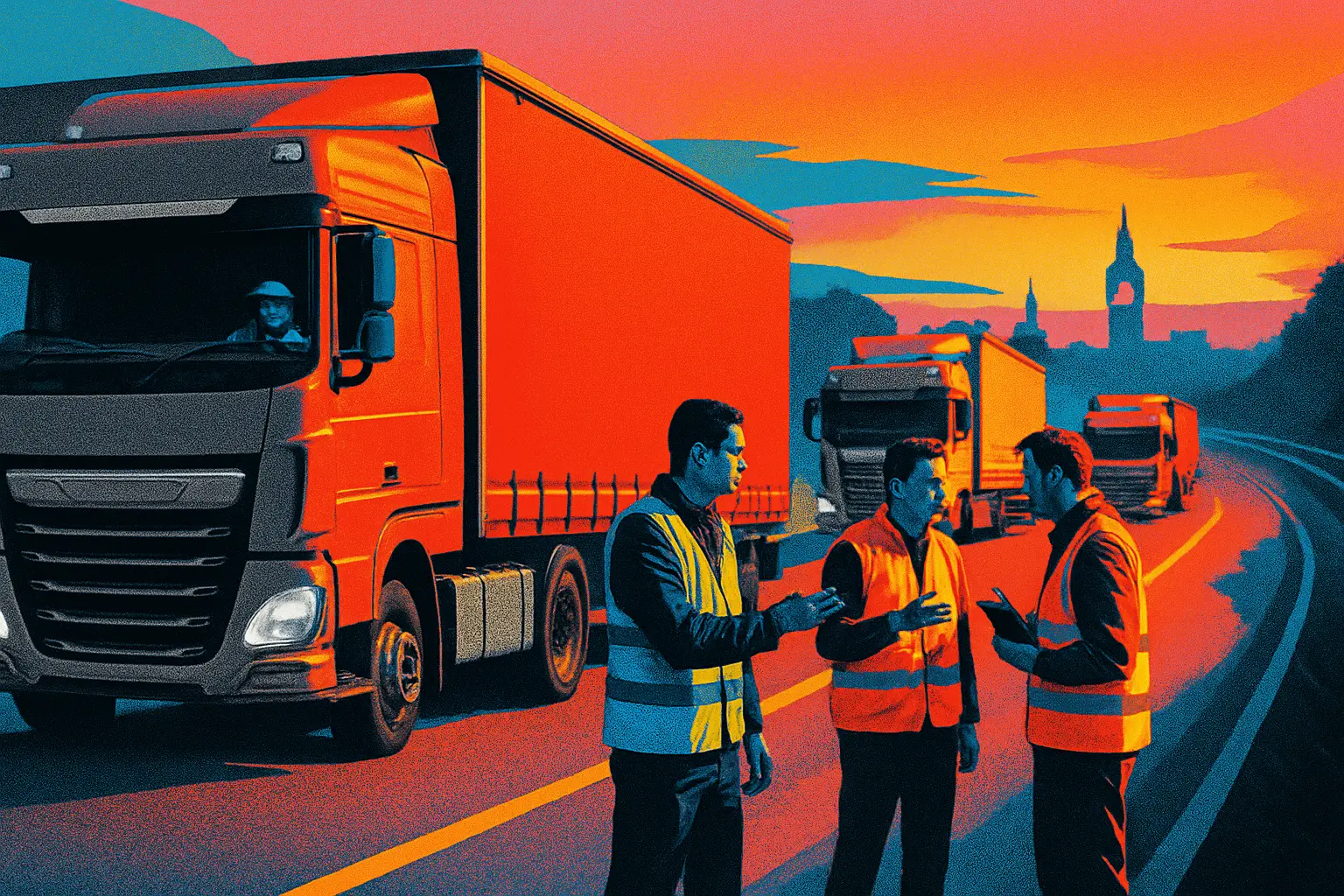
A steady look at haulier insurance today
Haulier insurance protects road freight operators against the financial impact of collisions, cargo losses, third-party injury, and downtime. It typically combines motor fleet cover for HGVs and vans with public liability, employers’ liability, and goods in transit. The aim is straightforward - keep vehicles roadworthy, claims handled efficiently, and operations compliant.
Premiums have risen across the UK. Fleet insurance costs climbed about 25% in 2023 as claims volumes and repair costs increased, with the average motor claim now around £3,600 and serious injury claims reaching six figures. In 2025, haulage insurance costs rose by roughly 7.9%, adding to pressure from tyres, repairs, and staffing. Parts delays have kept vehicles off the road longer, extending hire periods and pushing claims inflation. While early 2025 shows some moderation, rates for motor fleets are still rising, just more slowly.
Capacity matters too. A major insurer withdrew its UK truck product in 2025, and some competitors adjusted pricing upwards. Fewer providers can mean higher premiums and stricter terms. At the same time, the driver shortage and an ageing workforce increase accident risk - temporary or inexperienced drivers are more likely to be involved in incidents, which raises claims and premiums.
This guide walks through what is covered, how claims work, who genuinely needs this protection, and how to compare levels of cover safely. It will not overpromise. Instead, it explains the trade-offs clearly so you can choose protection that fits your operation and budget.
Insurance can offer real financial protection, but only when you understand what is covered - and where the gaps are.
What is covered in practice
A haulier policy is typically built around motor fleet insurance for your HGVs and support vehicles. Comprehensive fleet cover usually includes own-vehicle damage, third-party injury and property damage, fire and theft, and legal defence costs. Goods in transit can protect customer cargo against theft, loss, or damage while in your care. Many operators add public liability to cover accidental injury or property damage away from the vehicle, and employers’ liability to meet legal requirements for most UK businesses with staff.
Common exclusions include wear and tear, mechanical failure without an insured incident, undeclared modifications, overloading, and use outside stated territories. Cover may not respond if a driver lacks the correct licence, driver CPC, or if a vehicle is used for an undeclared purpose. For goods, exclusions often include inadequate packaging, inherent vice, or fraud. Higher-value loads may require declared values and security conditions.
Claims usually start with first notification to your insurer or broker, followed by evidence gathering - photos, dashcam footage, telematics, police reports, and consignment notes. Repair authorisation and liability assessment come next. If parts are delayed, courtesy or hire vehicles may be provided if included, though extended off-road times can increase costs. Clear documentation and prompt reporting typically speed settlement and reduce disputes.
Who benefits - and when it may be unnecessary
Haulage operators moving freight on UK roads are the core audience - from single-unit O-licence holders through to national fleets. Operators with higher mileages, urban delivery patterns, time-critical goods, or a mixed driver profile tend to benefit most from comprehensive fleet protection and robust risk management support. Businesses using agency or newly qualified drivers, or operating in congested areas, can see higher claim frequencies, making well-structured cover particularly important.
If you operate a very small number of vehicles on occasional, low-risk journeys, a standard commercial motor policy with carefully chosen limits may suffice, provided it meets your client and contractual requirements. However, once you take on regular haulage work, carry customer goods, or employ drivers, specialist haulier insurance is typically more suitable and can help ensure compliance, continuity, and contract readiness.
Cover choices made simple
-
Basic - Third party, fire and theft
- Core legal liability for injury and property damage to others.
- Fire and theft for your vehicles, but not accidental damage.
- Suitable for older assets with lower replacement costs and tight budgets.
-
Standard - Comprehensive fleet with goods in transit
- Accidental damage, fire, theft, vandalism for vehicles plus third-party liabilities.
- Goods in transit for customer cargo with set per-load limits.
- Often includes windscreen cover, courtesy or hire vehicles, and basic legal expenses.
-
Enhanced - Comprehensive with business interruption support
- Everything in Standard, plus higher goods limits, temperature-controlled cover, and wider territorial use.
- Downtime mitigation - increased hire vehicle allowance and loss-of-use extensions where available.
- Telematics, driver behaviour analytics, and risk management reviews to reduce claims.
-
Optional add-ons
- Public liability and employers’ liability if not already included.
- Breakdown and roadside assistance for HGVs, including European cover where permitted.
- Trailer cover - owned and non-owned - with specified values and security conditions.
- Enhanced legal expenses, uninsured loss recovery, and defence for regulatory investigations.
- Cyber and freight liability extensions for multimodal or freight-forwarding activities.
What drives the price
| Item | Typical impact on premium | Notes |
|---|---|---|
| Fleet size and mix | Larger fleets and HGVs cost more | More exposure and higher repair costs |
| Claims history | Frequent or high-value claims increase rates | Average claim around £3,600 influences pricing |
| Driver profile | Inexperienced or agency drivers lift risk | Accident likelihood can be 30% higher |
| Usage and routes | Urban, night, or high-mileage work costs more | Congestion and fatigue raise incident rates |
| Parts and labour | Inflation pushes repairs and hire durations up | Off-road delays increase claims totals |
| Market capacity | Fewer insurers can raise prices | Recent exits tightened competition |
| Cover level | Broader limits and add-ons cost more | Check if limits match contract demands |
Indicative ranges only - a small van fleet might pay in the low thousands per vehicle annually, while heavy haulage with higher sums insured can be several thousand per vehicle. Recent years saw sharp rises, with a notable 25% jump in 2023 and further but moderating increases in 2025.
Can you apply - and what insurers ask for
Most UK-registered haulage businesses with a valid operator’s licence can apply. Insurers will usually request motor insurance database details, vehicle schedules, claims experience, driver licence and CPC evidence, telematics or tachograph data, and proof of security measures such as yard fencing, cameras, and immobilisers. They may also ask for your goods types, contracts, and standard trading conditions.
Declines are common where there is undeclared adverse claims history, poor vehicle maintenance, no driver vetting, non-compliance with licence or CPC requirements, or a history of uninsured driving. High-risk cargoes without adequate controls, inadequate storage security, or misrepresentation on the proposal can also lead to refusal or restrictive terms.
From quote to claim - the simple path
- Gather vehicle, driver, and claims data with accurate schedules and use.
- Request multiple quotes across the market for fair comparison.
- Choose cover limits that match client contracts and real risks.
- Confirm security conditions, driver checks, and telematics requirements.
- Purchase the policy and add vehicles to the MID promptly.
- Report incidents quickly with photos, dashcam, and consignment notes.
The trade-offs at a glance
| Advantage or consideration | What it means for you |
|---|---|
| Comprehensive protection | Helps absorb repair, injury, and cargo costs after incidents |
| Contract readiness | Meets client and site requirements for liability and cargo limits |
| Risk management support | Telematics and reviews can reduce accidents and downtime |
| Rising market costs | Premiums rose 25% in 2023 with further increases in 2025 |
| Driver shortage risk | Inexperienced drivers can raise accident frequency and costs |
| Parts delays | Longer off-road times inflate claims and renewal pricing |
| Coverage limits and exclusions | Some cargo types or territories may need specific endorsements |
| Reduced insurer capacity | Fewer providers can squeeze options and bargaining power |
Read this before you commit
Check the excess on each vehicle and for cargo claims, as multiple excesses can apply per event. Confirm cover limits meet customer contracts and whether inner limits apply to theft-attractive goods. Review exclusions for driver licensing, overloading, unattended vehicles, temperature deviation, and territorial scope. Ask how hire vehicle allowances work if repairs are delayed and what security is required for trailers and yards. Examine renewal terms carefully - rates may change as claims trends and inflation move. Keep copies of policy wording, endorsements, and proof you meet any security or telematics conditions.
Alternatives that may fit better
- Single commercial vehicle insurance - suitable for occasional haulage or micro-operators.
- Freight liability or CMR cover - for carriers needing contractual liability protection, especially cross-border.
- Marine cargo insurance - for shippers or multimodal operators with warehouse-to-warehouse needs.
- Public liability only - for businesses without vehicles but with third-party exposure.
- Short-term HGV insurance - for temporary peak work or vehicle movements.
Common questions, clear answers
Q: Why are premiums rising so quickly? A: Higher repair costs, longer parts delays, increased hire periods, and claim severity have pushed prices up. Market capacity also shrank, and although rises are moderating, costs remain elevated.
Q: Can telematics really reduce premiums? A: Often, yes. Reliable driver behaviour data, speed management, and coaching can cut incidents and claims. Insurers may offer better terms where sustained improvements are demonstrated across the fleet.
Q: Are agency drivers covered? A: They can be, but only if declared and compliant with licensing and CPC rules. Expect closer underwriting and higher excesses if agency or inexperienced drivers form a significant share of your workforce.
Q: Do I need goods in transit if clients have their own cover? A: Check contracts. Many clients require you to carry goods cover regardless. Relying on a client’s policy can be risky and may not respond to your liabilities or operational delays.
Q: What if my work includes ports and international routes? A: Ensure territorial limits, Green Cards where needed, and customs documentation are in place. Consider freight liability, CMR extensions, and marine cargo if you handle multimodal legs.
What to do now
If you are comparing options, gather accurate fleet, driver, and claims data, then seek quotations from multiple providers to understand the market. Review limits, exclusions, and operational conditions side by side. Take your time, ask questions, and choose cover that fits your risks and contracts. You stay in control of the decision.
Important note
This guide is general information, not personal financial advice. Policy features, limits, and pricing vary by insurer. Always read the full policy wording, endorsements, and schedule, and confirm how any conditions apply to your operation.