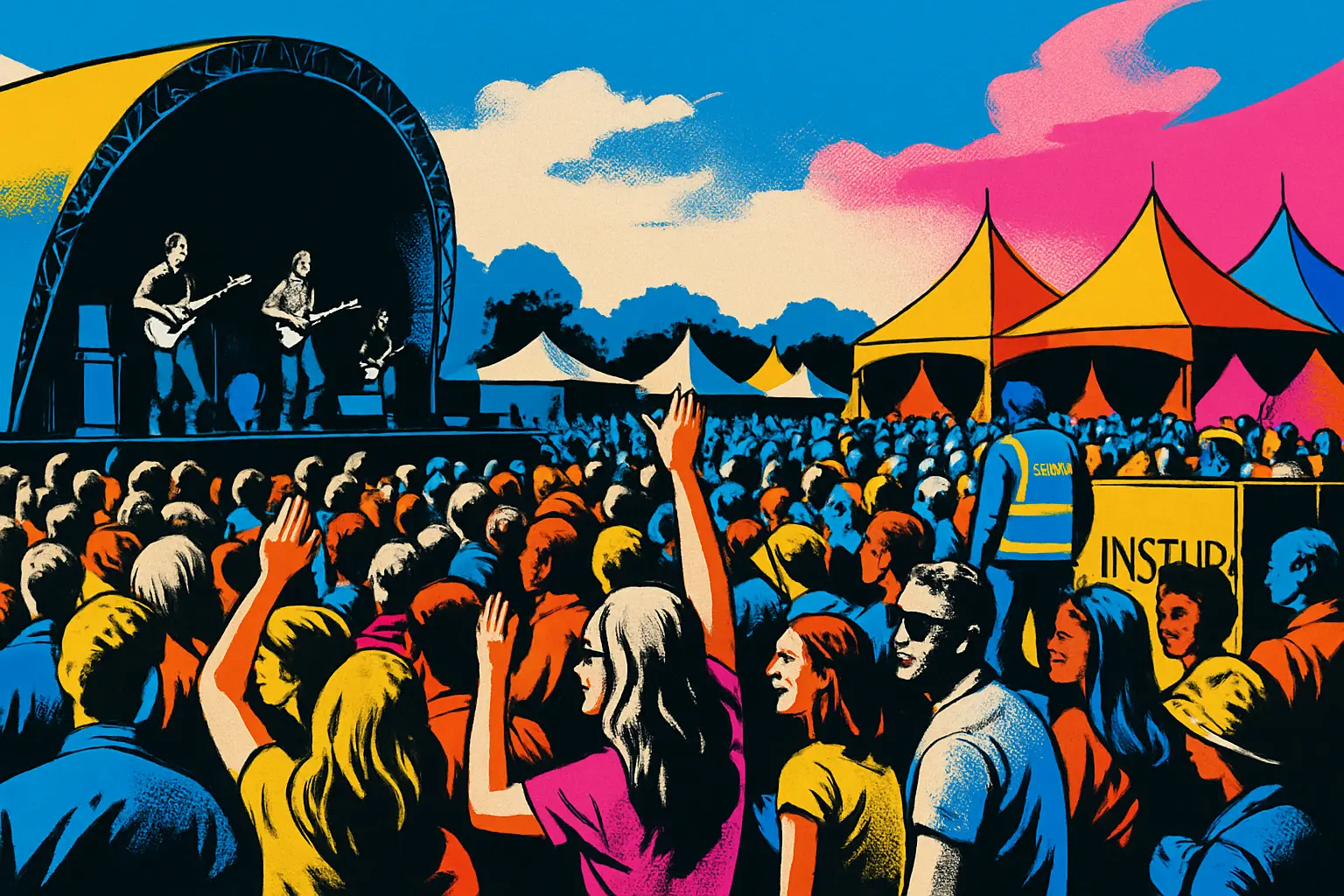
Why UK festivals need the right cover in 2025
Festival insurance is a specialist policy designed to protect organisers against the financial risks of running an event. It combines core protections like public liability and event cancellation with optional cover for areas such as adverse weather, equipment, suppliers, and even cyber risks linked to digital ticketing. If something goes wrong - heavy rain closes the site, a key act pulls out, or an attendee is injured - the right policy can help manage the costs and keep your event viable.
2025 is shaping up to be a challenging year for UK festivals. Rising costs, fewer headline acts, and supply chain pressures are increasing the chance of disruption. At the same time, new safety requirements for larger venues under the Terrorism (Protection of Premises) Act 2025 mean more emphasis on training, planning, and liability management. The sector is still sizeable, with festivals forecast to generate around £3.8 billion this year, but the stakes are higher and the margin for error is smaller.
A well-structured insurance policy is not a silver bullet. It will not fix poor planning or guarantee profit. What it can do is ring-fence specific risks so that a weather cancellation, infrastructure damage, or an injury claim does not become a financial crisis. This guide explains the cover types, how claims usually work, common exclusions, and the factors that affect premiums, including the 12% Insurance Premium Tax. You will also find practical steps to help you compare options with confidence.
Insurance can help protect your event budget - but only when limits, exclusions, and duties are understood and documented.
What is covered and what to expect in practice
Most festival insurance policies start with two core elements. Public liability covers injury or property damage claims from attendees, contractors, or third parties. Event cancellation covers irrecoverable costs and lost gross revenue if your event cannot proceed for reasons outside your control, such as severe weather or venue damage. From there, you can add targeted protections that match your set-up.
Adverse weather extensions can cover cancellations or curtailments caused by storms, floods, or high winds - a growing risk after several UK events were called off in 2024. Non-appearance cover can help if a headliner cancels due to illness or travel disruption. Property and equipment sections can insure staging, sound, lighting, and temporary structures. Employers’ liability is typically required if you have staff or volunteers. With the rise of digital ticketing, cyber cover can address fraud, data breaches, and payment system outages.
Claims follow a straightforward process. You will notify the insurer quickly, provide evidence such as contracts, invoices, site plans, risk assessments, weather reports, and ticketing data, then work with a loss adjuster if appointed. Policies usually exclude known circumstances, poor site maintenance, unlicensed activities, communicable disease unless specifically added, and cancellations caused by lack of demand or financial default of the organiser. It is important to check waiting periods for adverse weather and exact definitions of trigger events. A realistic sum insured - reflecting current costs and revenue - is essential to prevent underinsurance.
Who benefits most from this cover
Festival insurance is useful for organisers of music, arts, community, and food festivals across the UK, whether single-day or multi-day with camping. It also suits promoters, venue operators, and local authorities working with large crowds, temporary structures, and multiple suppliers. Events in cities with complex risk profiles or capacity above the new terrorism safety thresholds may find comprehensive liability and training-linked covers essential.
If you run a very small, private, invitation-only gathering with minimal spend, pre-existing venue cover and strict ticket limits might reduce the need for wider insurance. Likewise, if your event is fully indoors with robust venue protections and minimal production, the scope of cover required may be narrower. The best approach is to map your risks, tally committed costs, and buy only the protections that address realistic exposures.
Choose your cover level with confidence
-
Essential - Core Protections
- Public liability with suitable limits for crowd size and activities
- Employers’ liability if using staff or volunteers
- Basic event cancellation for uncontrollable external events
- Suitable for small day festivals with modest production
-
Standard - Broader Safeguards
- All Essential features, plus adverse weather cancellation
- Property and hired equipment cover for staging and tech
- Non-appearance for key performers where applicable
- Ideal for multi-stage events with outdoor elements
-
Comprehensive - High-Risk Events
- All Standard features, with higher cancellation limits based on gross revenue
- Terrorism-related extensions where available and appropriate
- Business interruption-style protection for critical suppliers and utilities
- Recommended for large or city-centre festivals with complex logistics
-
Optional Add-ons - Tailored Extras
- Cyber cover for digital ticketing, QR access, and payment fraud
- Money and ticket insurance including counterfeit or theft risks
- Equipment breakdown for generators and refrigeration
- Professional indemnity for programming or advice-related exposures
- Legal expenses for contract disputes with suppliers
Choose the limit to match your real exposure - not last year’s budget.
What it costs and why prices vary
| Item | Typical range or impact | How it affects your premium |
|---|---|---|
| Public liability limit | £2m - £20m | Higher limits cost more but may be required by venues or councils. |
| Event cancellation sum insured | £50k - £5m+ | Reflects your total costs and projected revenue - bigger sums mean higher premiums. |
| Adverse weather exposure | Low - High | Outdoor sites in peak storm periods attract higher rates. |
| Event size and duration | Small - Large | More attendees and days increase liability and cancellation risk. |
| Location and venue type | Indoor - Outdoor | City-centre and open-air sites can carry higher risk loadings. |
| Performer dependency | Low - High | Reliance on one headliner increases non-appearance exposure. |
| Claims history | Clean - Frequent | Recent losses or near-misses typically raise premium and excess. |
| Security and safety measures | Basic - Advanced | Strong risk management, trained staff, and compliance can reduce cost. |
| Cyber exposure | Minimal - Significant | Digital ticketing and payment systems may require additional cover. |
| Insurance Premium Tax | 12% | Applied to most premiums, so budget accordingly. |
Prices vary widely by event profile. Treat examples as guidance only and avoid setting cover limits solely to reduce cost.
Who can apply and what insurers expect
Most UK organisers, promoters, and venues can apply, including community groups and SMEs. Insurers typically ask for an event proposal detailing dates, site maps, capacity, amenities, risk assessments, contractor controls, and medical and security plans. For larger venues or festivals, evidence of staff training and procedures aligned to current terrorism safety requirements may be requested. Ticketing projections, marketing plans, and contracts with key suppliers are often needed for cancellation cover.
Applications can be declined if the event lacks permissions, has unresolved health and safety issues, includes prohibited activities, or if sums insured are unrealistic and unsupported by budgets. Previous unpaid premiums, fraud concerns, or poor claims cooperation can also lead to refusal. Being transparent, documenting controls, and showing how you will manage weather, crowd, and cyber risks will improve your chances of acceptance and help justify competitive pricing.
From quote to claim - your simple roadmap
- Gather event details, budgets, and risk assessments with realistic costings.
- Request quotes early, sharing site plans, capacity, and safety measures.
- Choose core covers and add-ons that match your specific risks.
- Set sums insured to reflect current costs and projected revenue.
- Review exclusions, excesses, and waiting periods carefully before purchase.
- Finalise the policy and keep documents accessible to your team and suppliers.
- Monitor risks before the event and notify material changes promptly.
- If something happens, report the claim immediately and follow insurer guidance.
The upsides and the trade-offs
| Pros | Cons or limitations |
|---|---|
| Helps protect budgets from cancellations and severe weather losses. | Not a guarantee of profit or attendance levels. |
| Meets venue and council requirements for liability and safety. | Exclusions apply, including known issues and some communicable diseases. |
| Customisable with cyber, non-appearance, and equipment options. | Higher limits and add-ons increase the premium and excess. |
| Supports compliance with evolving terrorism safety expectations. | Claims require evidence, contracts, and timely notifications. |
| Broad market choice as UK and global event insurance capacity grows. | Underinsurance risk if sums insured are not updated for inflation. |
Key checks before you commit
Before buying, confirm the policy limit, excess, and any inner limits for specific sections like adverse weather or non-appearance. Check exclusions carefully, especially for known circumstances, unapproved activities, site conditions, and communicable disease unless added. Understand waiting periods for weather triggers and any minimum preparation standards. Review renewal terms so you are not surprised by price changes, and budget for Insurance Premium Tax. Keep all contracts, invoices, and risk documents aligned with the cover so claims evidence is ready if needed.
Related protections worth considering
- Public liability only - For very small, low-risk community events where cancellation exposure is minimal.
- Venue insurance - When an indoor venue’s comprehensive policy already covers much of your risk.
- Equipment and property cover - If you own substantial staging or AV kit year-round.
- Cyber insurance - For festivals reliant on digital ticketing and onsite cashless payments.
- Non-appearance only - If a single headline act drives most of your revenue.
Common questions, answered clearly
Q: Is adverse weather automatically included? A: Not always. Many policies require an adverse weather extension with specific triggers and waiting periods. Check how the policy defines conditions and what evidence is needed to claim.
Q: What public liability limit do I need? A: It depends on venue requirements, crowd size, and activities. Many councils ask for at least £5 million. Large or high-risk events may need £10 million or more.
Q: Does insurance cover poor ticket sales? A: Generally not. Lack of demand or financial default of the organiser is usually excluded. Cancellation cover focuses on unforeseen external events outside your control.
Q: How do new terrorism safety rules affect insurance? A: Larger venues may need stronger training, procedures, and documentation. Insurers look favourably on compliant plans and may offer relevant liability or terrorism extensions where suitable.
Q: Can I insure a headline act cancelling? A: Yes, with non-appearance cover subject to policy terms and evidence like medical verification. Limits should reflect the revenue impact of losing that act.
Q: Are cyber risks covered for digital tickets? A: Only if included. Consider a cyber section for fraud, data breaches, or system outages that could disrupt entry or payments.
Q: What if inflation pushes up costs after I buy? A: Review sums insured before binding and again at renewal. Ask about uplift clauses or adjustable limits to reduce underinsurance risk.
What to do next
If you are planning a UK festival, map your risks, costs, and revenue forecasts, then compare quotes that match your real exposure. Read the wording carefully, ask questions about exclusions and triggers, and only buy limits you can justify. Take your time - a measured decision now can prevent a costly gap later.
Next step suggestion: gather your site plan, budgets, and supplier contracts, then request competing quotes with and without adverse weather and cyber options.
Important note
This guide provides general information, not personal financial advice. Policy terms, limits, and exclusions vary by insurer. Always read the full wording, confirm suitability for your event, and seek professional guidance if unsure.