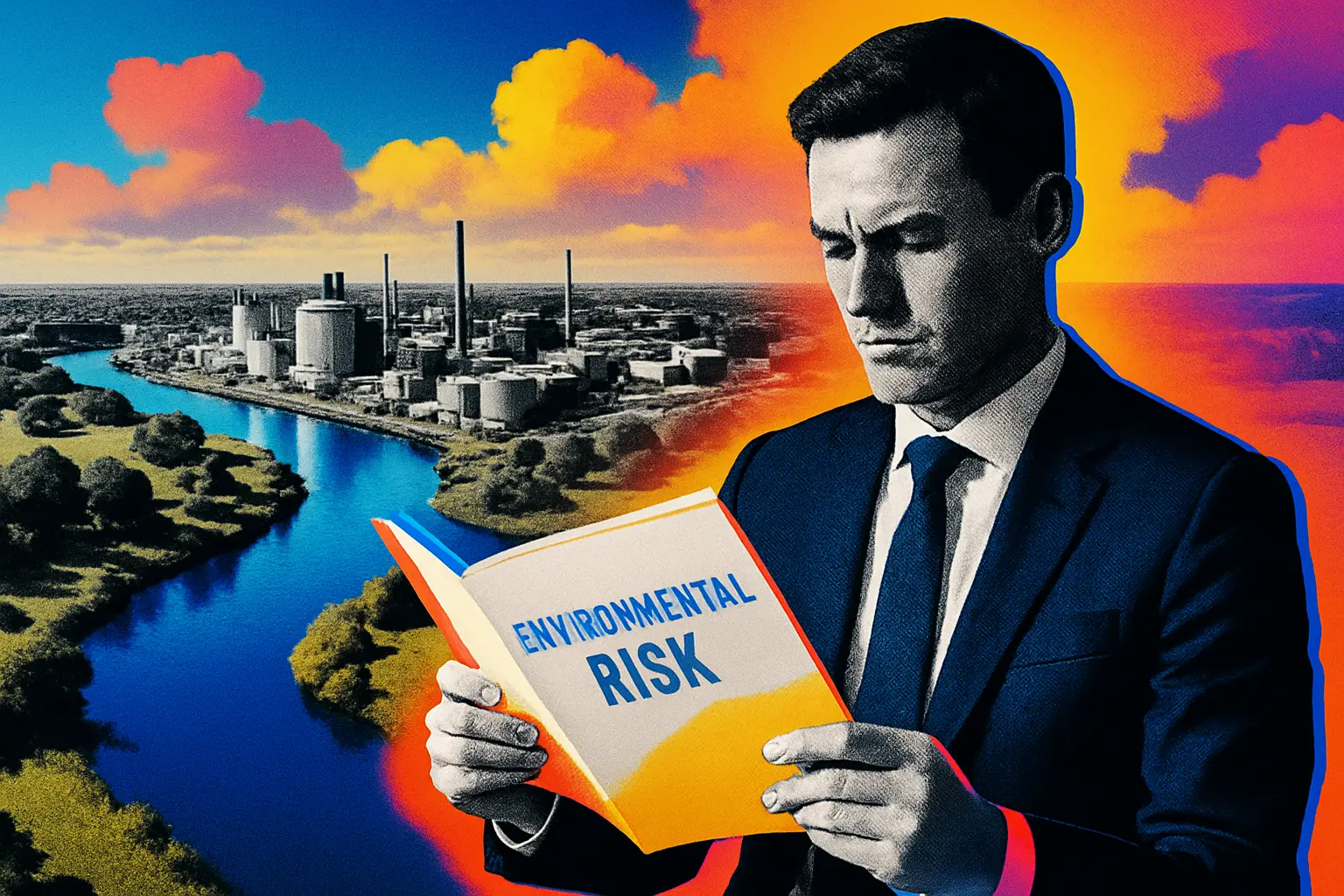
Clear cover for pollution risks
Environmental liability insurance protects your business if a pollution event causes harm to land, water, air, wildlife, or third parties. It steps in to fund clean-up, legal defence, and compensation where traditional policies may not respond, especially for gradual pollution or biodiversity damage. For UK firms, this is becoming more important as regulations tighten and public scrutiny rises.
Recent UK market movements are relevant. Overall insurance rates in early 2025 showed mixed trends, with some liability lines softening and others edging up. Environmental risks are front and centre in long-term risk rankings, and fines for pollution incidents have increased, highlighted by major penalties in the water sector. Many SMEs remain uninsured or underinsured, which leaves a gap when environmental liabilities surface. If a spill occurs, remediation costs can escalate quickly and regulators may require action even where fault is disputed.
This guide explains how environmental liability cover works, where the boundaries sit, and the choices you can make to tailor protection. The focus is on clear, practical information so you can weigh the benefits and limits without pressure. You will find explanations of core cover, common exclusions, typical costs, and what insurers ask for during underwriting. If you operate near watercourses, handle fuels or chemicals, manage waste, or rely on contractors, the details here will help you understand realistic outcomes and avoid unpleasant surprises.
Insurance can offer real protection, but only when you know what is included - and what is not.
What is covered and how claims work
Most environmental liability policies provide affirmative cover for sudden and gradual pollution that traditional liability policies often exclude. Core elements typically include third-party liability for bodily injury and property damage, statutory clean-up costs, and environmental damage such as harm to protected species or habitats. Many policies respond to changes in law during the policy period, which matters as UK guidance continues to evolve around emissions and remediation.
Coverage can extend to on-site and off-site cleanup, business interruption, and legal defence. Some policies include crisis management support to help you liaise with regulators and communities. For contractors, dedicated contractor pollution liability can cover pollution arising from your operations at client sites. Excess limits in the UK market commonly sit in the low millions, with higher layers available but more restricted than in past years.
Claims generally follow a straightforward path. If a spill enters a river, the insurer appoints specialists to contain, test, and remediate. Costs for clean-up, third-party losses such as fisheries impact, and regulator-driven remediation are paid up to the policy limit, subject to the excess. In a gradual seepage scenario, cover may apply if your policy includes gradual pollution and the incident is discovered during the policy period. Key limitations include known pre-existing conditions, intentional acts, fines and penalties where uninsurable by law, and some contractual liabilities. If your activities were outside what you disclosed at placement, you may face reduced or declined cover.
Transparency matters: read endorsements carefully, especially around storage tanks, waste handling, and transportation of hazardous goods. Where transport is a significant exposure, you may need a specific extension.
Who should consider it
Businesses that store, use, transport, or dispose of substances that could contaminate land or water benefit most. This includes manufacturers, logistics operators, waste and recycling firms, construction and demolition contractors, agriculture and food producers, estates with fuel storage, and property owners with legacy contamination risk. Firms operating near rivers, canals, or coastal areas face heightened exposure because remediation and biodiversity impacts can escalate quickly.
Professional service businesses can still face exposure through premises risks or contractor activities they arrange. Conversely, a small office with no hazardous materials and limited premises risk may find the exposure minimal. In those cases, it may be more appropriate to focus on strong general liability and property protections, while documenting environmental risk as low. The key is to assess your operations, neighbours, and supply chain, including downstream impacts. If group actions, regulator oversight, or ESG scrutiny could reasonably touch your business, environmental liability insurance can form a sensible part of your risk financing.
Picking a cover level that fits
- Basic - Core EIL
- Covers third-party injury, property damage, and statutory clean-up for sudden and gradual pollution. Suitable for lower-hazard premises-based risks. Limits often start from £1m to £2m. Fewer extensions and higher excesses.
- Standard - Enhanced EIL
- Adds biodiversity damage, on-site clean-up, business interruption, and crisis management. Includes retroactive date options for unknown historical conditions. Limits commonly £2m to £5m. Balanced excess and broader triggers.
- Premium - Comprehensive EIL
- Wider territorial scope, extended discovery and reporting windows, and reputational PR costs. Can include transportation, non-owned disposal sites, mould/microbial matter where permitted. Higher sub-limits for natural resource damage. Limits £5m to £10m+ via layers.
- Contractor Pollution Liability (CPL)
- Tailored for contractors at third-party sites. Covers job-site pollution, excavation incidents, and emergency response costs. Underwriting is often simpler than site policies. Market shows competitive pricing but thinner excess capacity above £10m.
- Sector Add-ons
- Agriculture: slurry and nutrient runoff, pesticide drift, and water abstraction impacts.
- Real estate and brownfield: known-conditions buy back, development-triggered releases, lender-required clauses.
- Manufacturing and logistics: storage tank endorsements, loading and unloading, and transportation extensions.
- Excess Layers and Aggregates
- Where claims severity is a concern or litigation trends are rising, consider excess layers to build to an appropriate aggregate limit, subject to market availability.
Cost, pricing and what influences premiums
| Factor | Typical impact on price | UK trend 2025 | Notes |
|---|---|---|---|
| Business activity and materials handled | High | Increased scrutiny of environmental exposures | Higher risk materials and proximity to water increase rates |
| Location and neighbouring exposures | Medium to high | Property rates softening in competitive pockets | Sensitive sites and dense urban areas cost more |
| Claims history and risk controls | High | Better terms for proven controls | Documented spill response plans can reduce premiums |
| Cover level and limits | High | Excess capacity tighter above £10m | Higher limits and low excesses increase cost |
| Policy breadth and extensions | Medium | Demand for broader EIL features rising | Add-ons like transport or biodiversity add cost |
| Financial strength and governance | Medium | ESG focus rising in underwriting | Good ESG reporting may support pricing |
| Market conditions | Medium | Mixed rate movements early 2025 | Competition helps some segments, liability trends vary |
Prices vary widely by sector and scale. A small low-hazard premises risk may pay a modest premium for basic cover, while heavy industry or complex logistics pay more due to potential remediation and third-party impacts. Use these trends as guidance rather than fixed figures.
Eligibility and what insurers look for
Most UK businesses can apply, including SMEs and larger corporates. Insurers typically request a proposal form, details of operations, site plans, storage tank information, spill prevention and response procedures, waste carriers, and historical incidents or enforcement actions. For sites with known contamination, surveys or environmental reports may be required. Contractors usually provide method statements, RAMS, and subcontractor controls.
Common decline triggers include undisclosed historical pollution, repeated enforcement actions, significant unremediated contamination, or activities outside appetite such as certain waste-to-energy processes. Capacity for very high limits can be constrained, so layered programmes may be needed. Eligibility is stronger where management can evidence training, maintenance, secondary containment, and rapid incident reporting protocols. Being open about prior issues is essential - non-disclosure can invalidate cover.
From quote to claim - the simple path
- Gather operational details, controls, and any environmental reports for underwriters.
- Request quotes for suitable limits, excesses, and territory you actually need.
- Compare exclusions and endorsements carefully, including tanks and transport.
- Choose a level of cover that matches credible worst-case scenarios.
- Bind the policy, confirm retroactive dates, and diarise key notification periods.
- Train staff and contractors on spill response and policy notification duties.
- If an incident occurs, notify immediately and follow the insurer’s instructions.
- Keep records of containment, testing, costs, and communications with regulators.
Benefits, trade-offs, and practical cautions
| Pros | Cons | Considerations |
|---|---|---|
| Affirmative cover for pollution, including gradual events | Premiums can be significant for higher-risk sectors | Balance limit selection with realistic worst-case costs |
| Funds statutory clean-up and natural resource damage | Fines and penalties may be excluded by law | Check treatment of regulatory costs and penalties |
| Crisis management and regulatory liaison support | Capacity above £10m can be harder to secure | Consider excess layers or structured programmes |
| Tailored CPL for contractors with simpler underwriting | Some historical conditions may be excluded | Explore retroactive cover options and known conditions buy backs |
| Responds to evolving laws during policy term | Sub-limits and exclusions restrict certain exposures | Review biodiversity, transportation, and disposal site wording |
| Supports ESG and stakeholder expectations | Documentation burden can be higher at placement | Prepare evidence of controls to aid pricing and terms |
Before you buy - key checks to avoid surprises
Review limits, aggregates, and any sub-limits for biodiversity damage, on-site clean-up, and transportation. Understand the excess and how it applies to multiple incidents within the policy period. Check the retroactive date and any exclusions for known or historical contamination. Confirm how gradual pollution is defined and triggered. Look closely at storage tank endorsements, contractor activities, waste disposal sites, and cross-border work. Ask about notification conditions, claim cooperation requirements, and how business interruption is calculated. Finally, consider how renewal terms may change following a claim, and keep essential documents - site plans, training logs, and maintenance records - ready for underwriting and potential claims.
Alternatives and related options
- Public liability insurance
- May cover third-party injury or property damage but often excludes pollution. Useful baseline cover for general risks.
- Property insurance with environmental extensions
- Can address on-site clean-up for sudden incidents. Limited scope compared to EIL.
- Directors and officers (D&O)
- Addresses management liability. Environmental claims may be indirect, such as disclosure or governance issues.
- Cyber insurance
- Relevant where environmental systems are digitally controlled and outages could trigger incidents.
- Professional indemnity
- For consultants advising on environmental matters. Covers negligence but not pollution cleanup liabilities.
Frequently asked questions
Q: Does public liability insurance cover pollution?
A: Often not. Many policies exclude gradual pollution and limit sudden incidents. Environmental liability insurance provides affirmative cover for clean-up and environmental damage subject to terms and limits.
Q: Are fines and penalties covered?
A: It depends on the jurisdiction and policy wording. Some regulatory costs are covered, but criminal fines or uninsurable penalties are generally excluded. Always check the policy schedule and exclusions.
Q: Do I need cover if I only store small quantities of chemicals?
A: Possibly. Even small spills can contaminate drains or watercourses and trigger statutory clean-up. A risk assessment will show whether minimal or more comprehensive cover is appropriate.
Q: How much cover limit should I buy?
A: Consider credible worst-case scenarios, neighbouring sensitivities, and legal trends. Many UK buyers select layered limits from £2m to £10m, subject to appetite and affordability.
Q: What evidence helps with underwriting?
A: Spill prevention plans, secondary containment details, maintenance records, training logs, waste carrier licences, and recent environmental assessments support better pricing and terms.
Q: Is contractor pollution liability separate from site cover?
A: It can be. CPL focuses on pollution arising from your contracting operations at client sites. Site policies address fixed locations. Some programmes combine both.
Q: Will the policy respond if laws change during the term?
A: Many EIL policies include language that responds to evolving environmental law during the policy period. Check the definitions and any restrictions on jurisdiction or timing.
What to do now
If environmental risk touches your business, take a measured approach. Map your exposures, document controls, and compare policy options side by side. Ask for clear explanations of limits, exclusions, and notification duties. When you are ready, seek quotes that match credible scenarios rather than theoretical extremes. You stay in control throughout the process.
Important information
This guide provides general information only and is not personal financial advice. Cover varies by insurer and policy wording. Always review terms, limits, exclusions, and endorsements carefully and seek professional advice if needed.