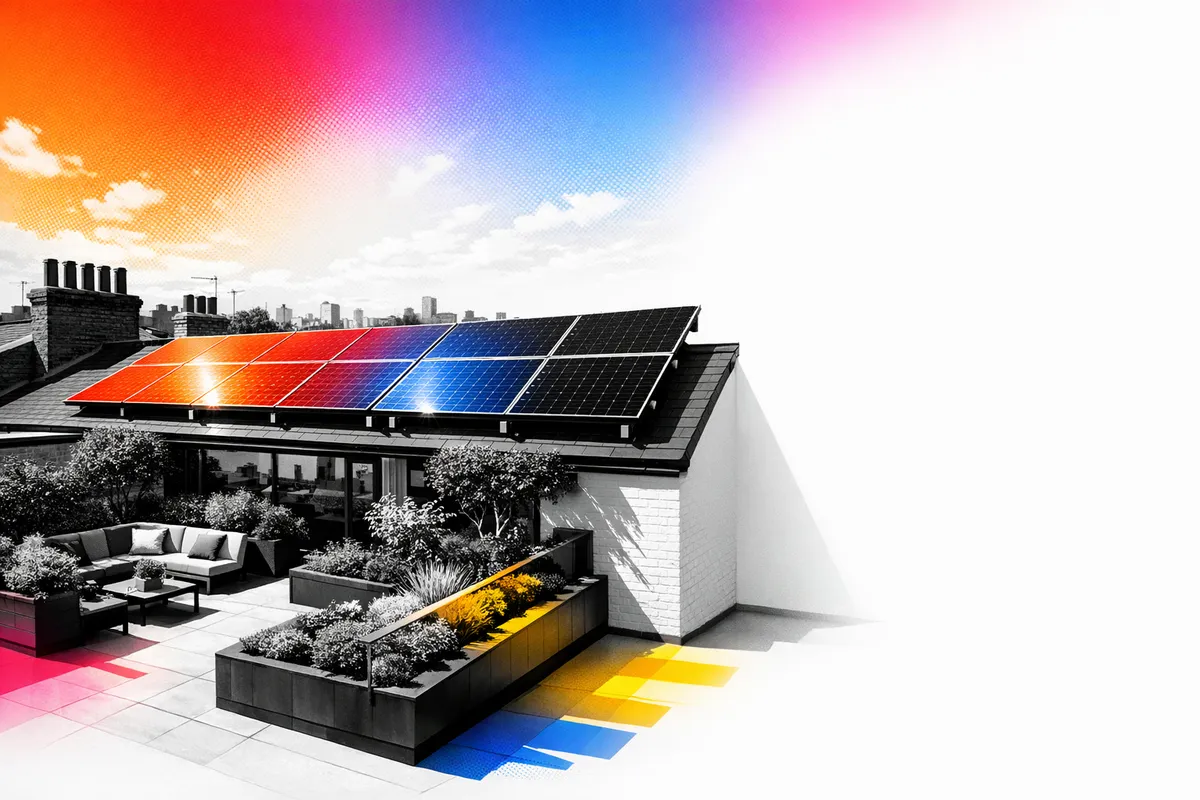

Solar finance, explained like you’d want it explained
Offering finance for solar panels can be a sensible way to help customers say yes to an upgrade that reduces bills and carbon. But in the UK, it only works well when you match the right funding route to the right household, explain the numbers clearly, and keep the compliance basics tight.
Several government-backed schemes and policies can materially lower the customer’s upfront cost and improve affordability. For some households, solar can be fully funded through ECO4, meaning there may be no customer finance needed at all. For many others, the 0% VAT relief (currently running until 31 March 2027) reduces the amount they need to borrow. And ongoing income through the Smart Export Guarantee (SEG) can strengthen the value case over time.
Finance can make solar accessible, but only when the customer understands the total cost, the term, and what happens if circumstances change.
This guide walks through practical, UK-relevant ways to structure solar finance offers, what to watch for, and how to present options in a fair, transparent way that builds trust and supports better outcomes.
Who this is designed to help
This is for UK businesses that sell, install, or bundle solar panels (and batteries) and want to offer customers a way to spread the cost. It is particularly relevant if you serve a mix of homeowners, including households on benefits, customers in lower EPC properties, and customers who are mortgage holders looking for incentives. It is also useful if you are building partnerships with lenders or installer finance providers and need a plain-English way to explain funding choices without overpromising savings or eligibility.
What it means to “offer finance” for solar
In practice, offering finance for solar panels means giving customers one or more ways to avoid paying the full installation cost upfront. That could be a regulated credit agreement (for example, a fixed-term loan arranged through a lender), installer-provided finance, or a blended approach where a grant reduces the total cost and the customer finances the remainder.
In the UK, the strongest affordability story often comes from combining three levers:
- Lowering the purchase price using policy support like 0% VAT on eligible solar and battery installations until 31 March 2027.
- Reducing or removing upfront cost through grant routes, particularly ECO4 funding for eligible homes in England, Scotland, and Wales (with scheme deadlines that matter).
- Improving the long-term value case using SEG payments for exported electricity, which can generate an ongoing credit based on the tariff the customer’s energy supplier offers.
The key is to present finance as an option, not a default, and to be transparent about what is guaranteed (loan payments and term) versus what can vary (energy bill savings and SEG rates).
How to build a finance offer that’s simple and compliant
Start by segmenting customers, because the “best” route is not the same for everyone. For electrically heated, low-income households on certain benefits with low EPC ratings, ECO4 can cover up to 100% of solar costs when installed through approved providers. This can turn your “finance offer” into a zero-upfront-cost pathway for the right customers, which can be powerful, but only if you screen eligibility carefully and avoid implying universal access.
For everyone else, focus on straightforward monthly payment options. Green finance and installer loans can cover 100% of system costs, often over terms up to around five years, and can be positioned alongside VAT relief to reduce the amount borrowed. If you are partnering with a bank or building society, keep the comparison clear: APR, fees, early repayment terms, and what happens on missed payments.
If you operate in regions with Solar Together group-buying, you can also reduce the financed amount by using bulk pricing. Lower principal generally means lower monthly payments and a safer affordability profile.
A good finance journey feels like a checklist, not a sales pitch: eligibility, total cost, monthly cost, term, and what the customer can do if plans change.
Why these incentives change the customer decision
Most customers are not deciding whether solar is “good” in theory. They are deciding whether it is affordable, low-risk, and worth it for their home. The UK policy backdrop helps on all three fronts.
ECO4 remains the main route for fully funded measures for qualifying homes, with urgency because of scheme timelines. Many customers who are eligible can access fully funded installations through approved providers, which means your role becomes guiding them to the right pathway rather than pushing credit.
For customers who are not eligible for grants, the 0% VAT rate on installations and batteries reduces the upfront cost and can cut the amount financed by hundreds to over a thousand pounds depending on the system. Over the life of the system, SEG payments for exported power can add meaningful value, but it is crucial to frame this carefully: SEG income depends on the supplier tariff and export levels, and it is not guaranteed.
Finally, upcoming changes matter for planning. The government’s Warm Homes Plan is expected to introduce interest-free or low-interest loans for solar and batteries via banks, with consultations and details expected post-2026 and loans anticipated from 2027. That could provide a scalable, lower-risk lending route for many households and a partnership opportunity for businesses that want a dependable funding channel.
The upside and the trade-offs
| Aspect | Pros | Cons |
|---|---|---|
| Customer affordability | Spreads cost monthly; can enable installs that would not happen upfront | Adds repayment obligation; affordability checks may reduce approvals |
| Grants (ECO4, local schemes) | Can reduce cost dramatically, sometimes to £0 upfront for eligible homes | Eligibility is strict; availability and deadlines apply; admin can be heavy |
| 0% VAT until 31 March 2027 | Lowers purchase price for many installs; reduces amount financed | Not a cash payment; customer still needs funds or finance for the remainder |
| SEG payments | Improves long-term value; adds income for exported electricity | Tariffs vary by supplier; income is not guaranteed; requires MCS and export metering |
| Installer finance and green loans | Widely available; can fund 100% of costs; simple customer journey | APR and fees can vary; early repayment terms may matter |
| Group buying (Solar Together) | Lower system cost through bulk pricing; can improve satisfaction | Not available everywhere; timing depends on local rounds |
| Brand and trust | Transparent finance can boost conversion and referrals | Poor explanations can create complaints and reputational risk |
Things that can trip you up (and how to avoid them)
The biggest risks when offering solar finance are not technical, they are communication and process. Avoid promising savings or payback times as if they are guaranteed. Energy bill savings depend on usage, system size, weather, export behaviour, and electricity prices. SEG earnings can be “hundreds per year” for some households, but only at certain export levels and tariff rates, and rates can change.
Be especially careful around eligibility-led routes. ECO4 can fund up to 100% of costs for qualifying households, but the criteria (benefits, EPC, property type, heating, and installation route through approved providers) must be checked. If you market “free solar” without clear eligibility wording, you risk misleading customers.
Also pay close attention to quality and proof points. SEG requires an MCS-certified installation and appropriate metering, so your operational process needs to ensure customers can actually access the export payments you mention. On finance agreements, be clear on the total amount repayable, any fees, whether the rate is fixed, and what early repayment looks like.
Finally, watch scheme timelines. ECO4 funding and related routes have deadlines that influence customer urgency. If you create offers that only work within a window, make that window explicit so customers are not rushed or surprised.
Other ways customers may fund solar
- ECO4 fully funded installs (eligible homes) - For qualifying low-income households on benefits with low EPC ratings, via approved providers in England, Scotland, and Wales.
- Warm Homes Local Grant (England) - Up to £15,000 for eligible low-income, energy-inefficient homes via local authorities, running until 31 March 2028.
- Solar Together group buying - Regional bulk-buying rounds that can reduce the price before any finance is applied.
- Green home rewards through mortgages - Cashback offers (up to around £1,000 in some cases) from participating lenders, subject to lender terms.
- Personal loans from banks and building societies - Customer-arranged borrowing, often with clear fixed terms.
- Installer-arranged credit - A managed application journey at point of sale, typically funding 100% over an agreed term.
- Waiting for Warm Homes Plan loans (expected from 2027) - A potential future route for interest-free or low-interest lending, subject to final scheme design.
FAQs customers and partners will ask
Some do. Under ECO4, eligible households (often low-income, on certain benefits, with low EPC ratings and specific heating circumstances) may receive fully funded measures through approved providers in England, Scotland, and Wales. Eligibility is not universal.
Is VAT still charged on solar panels?
For many household installations, VAT is currently 0% on solar panels and batteries, and this relief is scheduled to run until 31 March 2027. The invoice should reflect the VAT treatment if the installation qualifies.
Can customers use SEG income to pay the loan?
They can use any income however they like, but you should not present SEG as a guaranteed offset. SEG payments depend on export levels, tariff rates, and having an MCS-certified system with the right metering.
What term should we offer on solar finance?
Many solar loans are structured over a few years (often up to around five), but the right term depends on affordability, APR, total cost, and customer preference. Longer terms reduce monthly payments but can increase total interest.
Can we blend a grant with finance?
Yes. If a customer qualifies for a grant route that covers part of the cost, finance can be used for the remainder. The customer should see a clear breakdown of grant contribution versus borrowing.
What is changing after 2026?
ECO4 remains a key route in the near term, with scheme timelines that matter. Separately, the Warm Homes Plan is expected to introduce interest-free or low-interest loans via banks, with details expected after post-2026 consultations and lending anticipated from 2027.
Do we need to mention MCS certification?
If you reference SEG or performance standards, yes. MCS certification is a common requirement for accessing SEG and is an important consumer protection signal.
How do we avoid complaints about savings claims?
Use ranges, explain assumptions, and separate what is fixed (loan terms) from what varies (usage, tariffs, SEG rates). Encourage customers to consider their own consumption patterns and ask for written estimates.
How Switcha can support your solar finance journey
As a UK price comparison website, Switcha helps you turn complexity into clear, comparable choices. We can support your content and customer journeys by explaining funding routes in plain English, highlighting UK-wide policies like 0% VAT and SEG, and signposting eligibility-led schemes such as ECO4 and local grants where relevant. The aim is simple: help customers understand their options, compare costs fairly, and make confident decisions without pressure.
Disclaimer
This article is for general information only and does not constitute financial, legal, or tax advice. Scheme rules, eligibility criteria, VAT treatment, lender terms, and SEG tariffs can change. Customers should check current government guidance, confirm installer accreditations (including MCS where relevant), and review finance agreements carefully before committing.