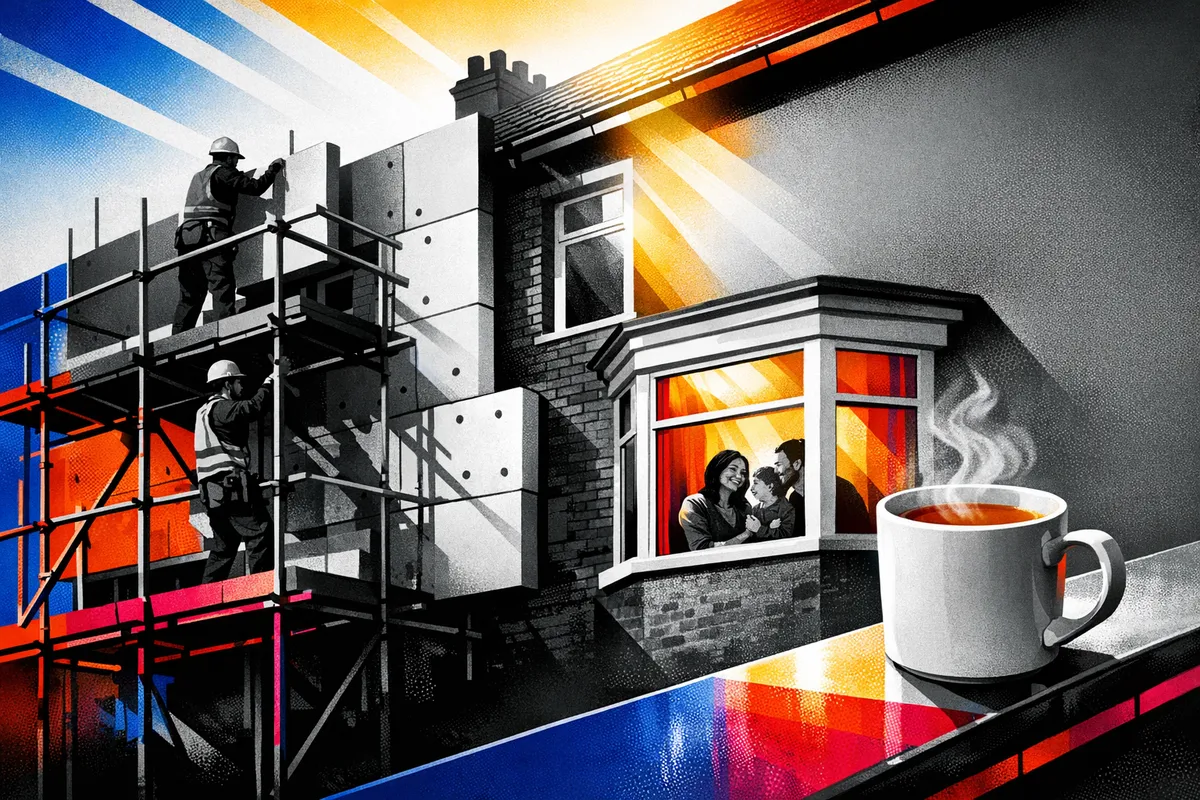

Setting the scene: finance works best when grants come first
If your business is planning to offer finance for insulation, you are stepping into a space that genuinely affects household finances. Done well, insulation can lower bills, improve comfort, and reduce the risk of damp and heat loss. Done poorly, customers can end up paying for work they could have had funded, or taking credit that does not match their circumstances.
The most important practical point in the UK right now is that a large portion of insulation demand is driven by grants that can cover some or all of the cost. That changes how you should design customer finance. In many cases, the right approach is not "finance the whole job". It is "help the customer secure funding first, then finance any remaining contribution".
Two dates matter for planning. The Great British Insulation Scheme (GBIS) is due to end on 31 March 2026, with installations needing to be completed by then. Alongside that, ECO4 funding continues until March 2026 and is widely used for fully funded insulation in eligible low-income homes. After GBIS closes, the direction of travel is toward the Warm Homes Plan and local delivery via schemes such as the Warm Homes Local Grant (England, 2025-2028).
The safest customer outcome is usually: eligibility check first, grant route second, finance last.
Who this guidance is designed for
This is for UK businesses that want to offer customers finance linked to insulation works, such as installers, managing agents, retrofit coordinators, or home improvement firms that quote for loft, cavity wall, solid wall, external wall, or floor insulation. It is also relevant if you are building a "buy now, pay later" style option, partnering with a lender, or creating a subscription model for home upgrades.
It is written for teams who need to balance customer outcomes, compliance expectations, and commercial reality. You do not need to be a grants expert to use it, but you do need to accept one core truth: in the UK, grants often compete directly with your finance offer, so your process must handle that transparently.
What “offering finance for insulation” really means in 2026
In practice, offering finance for insulation means giving customers a way to spread the cost of energy efficiency measures over time. That might be a regulated credit agreement provided by a lender, a brokered solution, or (in some limited models) an invoice-based payment plan.
However, insulation is not like a typical discretionary purchase. A significant number of households can qualify for free or heavily subsidised work, especially where the property has an EPC rating of D to G and the household is on certain benefits or below an income threshold. ECO4 can fund up to 100% of insulation for eligible low-income households, typically delivered through energy suppliers. GBIS can provide free loft and cavity wall insulation for many homes in council tax bands A to D in England (A to E in Scotland and Wales), with no benefits requirement, but it closes on 31 March 2026.
So the "product" you are effectively offering is often one of these:
- Top-up finance when a grant covers most of the cost but not all.
- Bridge finance to manage cashflow between assessment, approval, and installation timelines.
- Finance for ineligible households, where no grant applies, but the savings case is still strong.
Cost and savings context matters for customer decision-making. Typical UK pricing often quoted for insulation measures includes cavity wall insulation at roughly £1,000 to £2,200, with annual savings commonly estimated around £230 to £395 and an indicative payback of about 5.1 years. Floor insulation is often around £550 to £1,100, saving roughly £55 to £115 per year. Solid wall insulation can deliver higher annual savings, commonly quoted around £430 to £640, but it is also a higher value job and may require more disruption.
How to build a customer journey that reduces risk and increases take-up
A strong insulation finance journey starts with the same principle regulators expect across financial decisions: make the outcome suitable, and make the customer understand it.
Start by routing customers through a simple eligibility triage. For GBIS, the most defensible path is to signpost the official process and encourage a free supplier-led assessment. Customers can be directed to apply via GOV.UK to connect to participating energy suppliers for a free property assessment under GBIS. That assessment helps confirm what insulation is suitable and whether any customer contribution applies. This matters because you can position your finance as a contingency option if a contribution is required, rather than pushing credit upfront.
For ECO4, your flow should clearly identify whether the household is likely to qualify via benefits such as Universal Credit or Pension Credit, and whether the property is likely to sit within EPC bands D to G. Where ECO4 may cover 100% of the cost, customers should not be encouraged to borrow.
Then design your quoting and finance stage around three clear numbers:
- The total installed price.
- The expected grant contribution (if any), with a clear note that final eligibility is confirmed by the scheme administrator or supplier.
- The customer contribution, which is the only amount you should consider financing.
Operationally, you will also need to plan for scheme deadlines. GBIS ends 31 March 2026, with completion required by that date, so your pipeline must account for survey lead times, installation scheduling, and remedial works. After that, for England, the Warm Homes Local Grant (part of the Warm Homes Plan direction of travel) offers up to £15,000 for energy efficiency measures and up to a further £15,000 for low-carbon heating, for eligible low-income households with EPC D to G. It runs 2025 to 2028 and is positioned as a successor route as GBIS ends.
If your process makes grants easy to understand, customers are more likely to trust your finance when it is genuinely needed.
Why finance can still make sense when “free insulation” exists
At first glance, grants can look like they eliminate the need for finance. In reality, they often reshape it.
First, not every household qualifies. GBIS is band-based and time-limited. ECO4 is more targeted to low-income and benefit-eligible households. In Scotland, Warmer Homes Scotland can cover up to 100% of costs for eligible low-income homeowners and tenants, and Home Energy Scotland also offers support such as cashback (often quoted up to £7,500) and interest-free loans (often quoted up to £15,000), which can reduce but not always remove the need for additional funding.
Second, even when a household qualifies, contributions sometimes remain. A supplier assessment might identify that a property needs preparatory work, ventilation improvements, or non-standard measures not fully covered. This is where carefully structured top-up finance can help customers proceed without delay, as long as it is framed as optional and the customer understands what the grant covers and what it does not.
Third, from a business perspective, the economics of insulation are increasingly compelling when presented honestly. Cavity wall and loft insulation can offer meaningful annual savings. Solid wall insulation can offer even higher savings, particularly for hard-to-treat homes. These savings estimates should never be presented as guarantees, but they can help customers compare the cost of borrowing against likely reductions in energy spend.
Finally, grants end and change. GBIS is due to close in March 2026, and the market will continue under Warm Homes Plan-style funding and local delivery routes. If your finance proposition is designed around "grant first, finance second", it will remain relevant even as schemes evolve.
Pros and cons for a business offering insulation finance
| Aspect | Pros | Cons |
|---|---|---|
| Customer outcomes | Helps customers proceed where a contribution is required or where they are ineligible for full grants | Risk of customers borrowing unnecessarily if grants were available or if eligibility was unclear |
| Conversion and revenue | Can increase acceptance on higher-ticket measures like solid wall or external wall insulation | Adds complexity to sales, underwriting, and post-install admin |
| Compliance and trust | A transparent "grants-first" approach can build long-term trust and reduce complaints | Poor explanations of APR, total repayable, or eligibility can create regulatory and reputational risk |
| Cashflow | Can smooth payment timing and reduce dropped jobs due to upfront cost | If structured incorrectly, you may face higher cancellations, arrears, or disputes |
| Competitive position | Lets you compete with installers who already offer pay-monthly options | Competes directly with free schemes like ECO4 and GBIS, so messaging must be careful |
| Customer value | Supports deeper retrofits when aligned with Warm Homes Local Grant and council schemes | Customers may delay decisions while waiting for assessments and scheme approval |
Things to watch closely before you put an offer in front of customers
Start with scheme reality, not marketing. GBIS and ECO4 are delivered via energy suppliers and their delivery partners, and eligibility is not something your sales team should "promise". The safest wording is always conditional: customers may be eligible, and a free assessment will confirm.
Be especially careful with deadlines. GBIS is due to close on 31 March 2026 and installations must complete by then, so avoid selling a finance plan that assumes the customer will receive a GBIS-funded measure if there is not enough time for assessment and completion.
Check for stacked support. Beyond national schemes, local councils sometimes offer additional grants for measures like external wall insulation, with postcode-based eligibility. Customers can sometimes combine local support with national programmes, which reduces or removes the need for borrowing. Your process should encourage customers to check their council options rather than discouraging it.
Treat savings as estimates, not promises. The commonly quoted annual savings figures (for example, around £200 to £600 per year depending on measure and home type, and around £430 to £640 for solid wall insulation in some estimates) should be presented as illustrative and dependent on property, heating use, energy prices, and workmanship.
Finally, if you are brokering or facilitating credit, ensure you understand your regulatory obligations and the boundary between information and advice. If you are not authorised to provide regulated financial advice, keep your language factual, provide clear comparisons, and signpost independent help where appropriate.
The goal is simple: customers should never feel they were nudged into credit when a grant, or a cheaper option, was available.
Alternatives to offering customer finance
- Grant-first referral model: build partnerships with energy suppliers or retrofit coordinators so eligible households use ECO4 or GBIS first, then return to you only for uncovered works.
- Warm Homes Local Grant pathway (England, 2025-2028): support customers to access up to £15,000 for efficiency measures (and up to another £15,000 for low-carbon heating) where eligible, reducing the need for borrowing.
- Local authority funding checks: add a council-grant lookup step, especially for external wall insulation in targeted areas.
- Supplier assessment signposting via GOV.UK: direct customers to the official GBIS route for a free energy supplier assessment, then quote only once measures are confirmed.
- Scotland-specific support: for Scottish customers, route eligible households to Warmer Homes Scotland and Home Energy Scotland support (including interest-free loans and cashback where available) before proposing any commercial credit.
FAQs customers and sales teams ask most often
Yes, sometimes. ECO4 can fund up to 100% of insulation for eligible low-income households, typically those on certain benefits and in EPC bands D to G. GBIS can also provide free loft or cavity wall insulation for many homes based on council tax band, without benefits, but it ends on 31 March 2026.
What is the safest next step if a customer asks about GBIS?
Encourage them to use the official GOV.UK application route to connect to an energy supplier for a free assessment. The assessment confirms what is suitable and whether any contribution is needed. Treat any eligibility discussion as provisional until confirmed.
How much can insulation save per year?
Savings depend on the home, energy prices, and heating habits. Typical estimates often cited include roughly £230 to £395 per year for cavity wall insulation, £180 to £350 for loft insulation, and around £430 to £640 for solid wall insulation. These are not guarantees.
What happens after GBIS ends?
GBIS is due to stop accepting new routes after 31 March 2026, and installations must complete by then. In England, support is expected to continue through the Warm Homes Plan direction of travel, including the Warm Homes Local Grant (2025-2028) for eligible low-income households and EPC D to G homes.
Should we offer finance for the full job price?
Often, it is better to offer finance only for the customer contribution after grant funding is confirmed. This reduces the risk of customers borrowing unnecessarily and lowers complaint risk.
Do local councils offer extra help?
In some areas, yes. Councils can offer additional or targeted grants, including for external wall insulation. Criteria can be postcode-specific, so it is worth checking locally alongside ECO4 and other national schemes.
Are there different options in Scotland?
Yes. Warmer Homes Scotland can offer up to 100% funding for eligible households, and Home Energy Scotland may provide cashback and interest-free loans for certain measures. Eligibility and availability can differ from England and Wales.
How Switcha can help you support customers responsibly
Switcha is a UK price comparison website. We help businesses signpost customers to the right starting point, whether that is checking eligibility for schemes like ECO4 or GBIS, exploring regional support such as Warmer Homes Scotland, or comparing options when a top-up contribution remains. Because our role is comparison and clarity, we focus on helping you present balanced choices: what may be available for free, what may be subsidised, and what a customer might need to fund themselves. That makes your finance offer easier to explain, easier to justify, and more likely to be trusted.
Disclaimer
This article provides general information only and does not constitute financial, legal, or regulatory advice. Grant schemes, eligibility criteria, funding levels, and deadlines can change and may vary by nation, council area, supplier, and property type. Customers should confirm eligibility through official routes such as GOV.UK, their local council, or scheme administrators, and consider independent financial guidance before taking credit. Savings figures are estimates and are not guaranteed.