
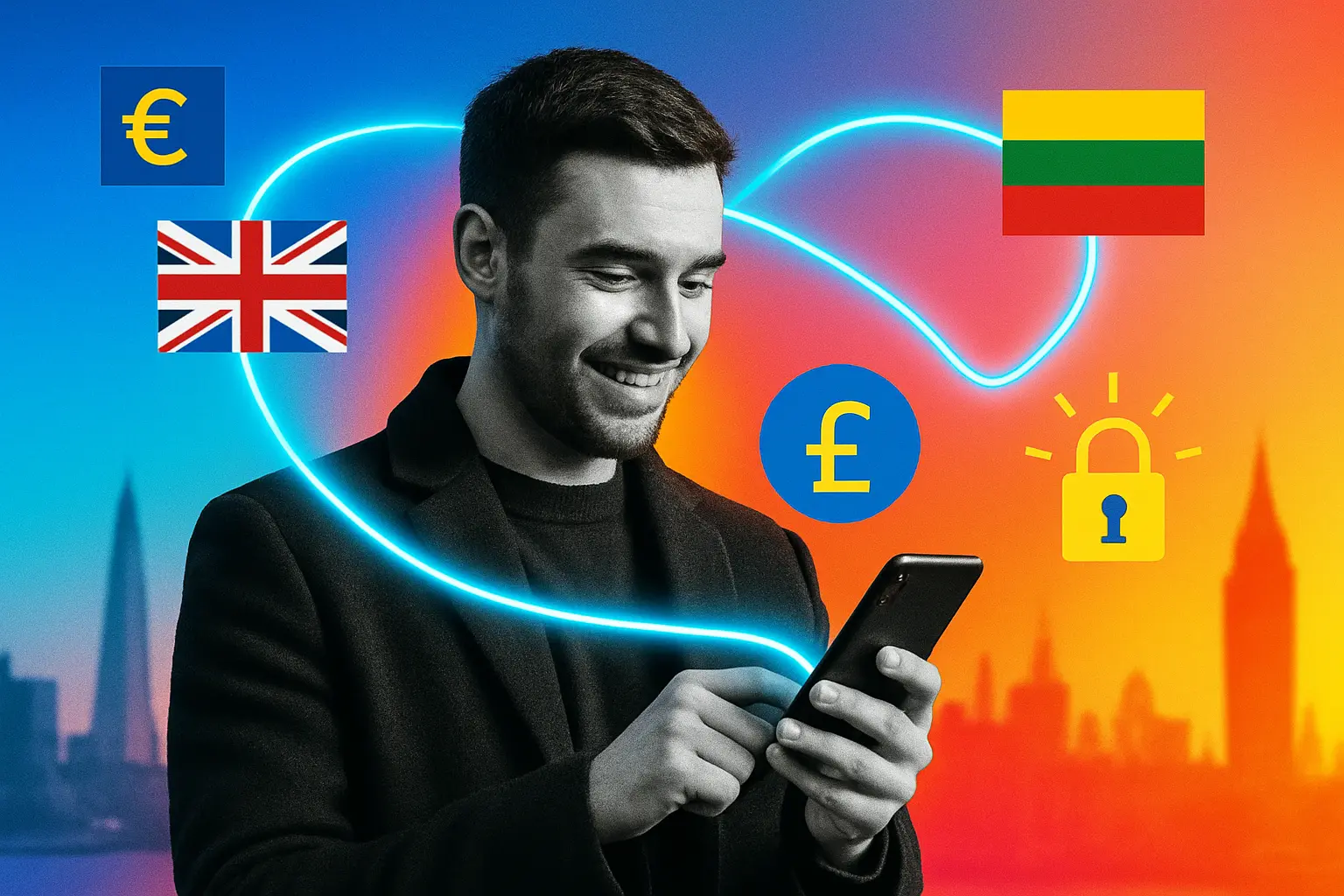
Clear, UK-focused guidance to send money to Lithuania safely, quickly and cheaply, with provider comparisons, step-by-step instructions, and practical tips to avoid hidden fees and delays.
Getting money to Lithuania without wasting pounds
Sending money overseas should be simple and cost-effective. Yet bank fees, exchange rate markups, and slow processing can chip away at what your recipient actually receives. This guide focuses on UK to Lithuania transfers in euros, using plain English to help you keep more of your money where it belongs - in your recipient’s account. We compare leading providers, outline the quickest routes, and flag the common pitfalls to avoid.
The numbers matter. For a £1,000 transfer to Lithuania, small differences in fees and exchange rates can mean a gap of tens of euros for your recipient. Some app-based services now provide near-instant payments and transparent pricing, which can beat traditional bank transfers on both speed and cost. We will walk you through the key options so you can choose a method that matches your needs - whether that is the cheapest route, instant delivery, or a secure bank-to-bank transfer.
Tip: Check the total received in euros, not just the upfront fee. Hidden rate markups can cost more than a visible fee.
Is this guide right for you?
If you are a UK resident sending euros to family, paying bills, or supporting studies or property costs in Lithuania, this guide is for you. It covers app-based transfers, secure bank specialists, and cash pickup options, with practical steps for first-time and repeat senders. You will find UK-specific payment methods such as debit card, Open Banking, and bank transfer, plus advice on timing and security.
The essentials at a glance
Choosing the right provider can materially change the amount arriving in Lithuania. For a £1,000 transfer, Revolut’s Standard plan has recently delivered €1,188.60 with a £0.00 fee, while Remitly, Wise, and Western Union delivered less due to fees and rates. Beyond headline costs, consider speed and convenience too. Wise completes 70% of GBP to EUR transfers in under 20 seconds and 95% within a day. Revolut supports instant card-to-card in Lithuania and instant Revolut-to-Revolut payments. TransferGo offers first two transfers with zero fees, with a choice of next-day bank delivery or instant card payouts.
Here is a simple comparison snapshot for £1,000 sent UK to Lithuania:
| Provider | Fee | Estimated received | Typical speed |
|---|---|---|---|
| Revolut (Standard) | £0.00 | €1,188.60 | Instant for Revolut users - instant to eligible cards |
| Remitly | £1.48 | €1,187.40 | Instant to fast options - bank deposit available |
| Wise | £3.87 | €1,185.80 | 70% under 20 seconds - 95% under 1 day |
| Western Union | £2.99 | €1,176.34 | Varies - cash and bank options |
Always check live quotes in-app before sending, as rates and fees can change.
Step-by-step: making a transfer
Start by deciding your priority - lowest cost, fastest delivery, or a balance of both. If cost is key, compare the euro amount the recipient will receive after all fees. Revolut often leads on delivered amount for £1,000 transfers and shows real-time fees and timings. If speed is critical, Wise and Revolut both support near-instant delivery, especially with UK debit card payments. TransferGo lets you choose between a free or low-fee next-day bank transfer and a small-fee instant card transfer, with the first two transfers free.
Set up your account with your chosen provider and verify your identity. Have the recipient’s details ready: full name, 20-character IBAN, and address. For bank specialists such as Key Currency, you will agree a rate with an account manager, send GBP to a segregated client account in the UK, and they will deliver EUR to the Lithuanian IBAN. With MoneyTO, you can pay by bank, card, or Open Banking and deliver to bank accounts, cards, or cash pickup, typically near-instant. Review the final quote carefully, then confirm the transfer and keep the receipt.
Why your choice of provider matters
What seems like a small fee can hide a larger exchange rate cost. Traditional UK banks often add higher fees and weaker rates, so less arrives in Lithuania. Dedicated providers typically use sharper pricing and faster rails. Wise publishes mid-market rates and ranks payment methods by speed, with debit cards and Open Banking usually the quickest and best value. Revolut offers instant Revolut-to-Revolut and real-time transfers to eligible Visa or Mastercard in Lithuania, which can help with time-sensitive bills. TransferGo provides flexibility - bank-to-bank next day with low or zero fees, or instant card with a small fee, plus free first transfers.
Security and reliability also matter. Bank specialists like Key Currency focus on international bank transfers, using safeguarded client accounts and a clear process that can be ideal for larger sums. If your recipient needs cash, services such as Remitly and MoneyGram enable pickup at trusted locations. Matching your needs to the right provider ensures you are not overpaying or waiting unnecessarily.
Pros and cons
| Approach | Pros | Cons |
|---|---|---|
| App-based providers (Revolut, Wise, TransferGo) | Low fees - strong rates - fast to instant delivery - transparent quotes | Limits for new users - requires app verification - fees vary by method |
| Bank transfer specialists (Key Currency) | Excellent rates for larger amounts - secure segregated accounts - personal service | Less instant - requires setup and call or online registration |
| Traditional high street banks | Familiar - no new account needed | Higher fees - weaker rates - slower delivery |
| Cash pickup (Remitly, MoneyGram) | Recipient does not need a bank account - wide payout network | Usually lower received amount - pickup limits and ID needed |
| Hybrid options (MoneyTO) | Multiple UK payment methods - bank, card, Open Banking - near-instant to bank or card | Fees vary by route - may not be the very cheapest on large sums |
Watch-outs that can cost you
Exchange rate markups are the silent fee. A provider might advertise a tiny transfer fee but use an unfavourable rate that reduces the euros received. Always compare the final EUR amount, not just the fee line. Payment method also affects both cost and speed. With Wise, debit card or Open Banking is typically faster and cheaper than credit card or SWIFT. With TransferGo, bank transfer is usually the cheapest for next-day delivery, while card is the quickest for instant payout.
Cut-off times can shift delivery to the next working day, especially for bank transfers. If a bill is due today, choose instant options like card-to-card where supported by Revolut or card payouts via providers that enable it. Make sure recipient details are correct - the full name, 20-character IBAN, and address are required for IBAN payments. Finally, verify the provider’s security and safeguards. Bank specialists using segregated client accounts reduce counterparty risk for larger transfers.
Alternatives you can consider
- Revolut - best delivered amount in recent £1,000 comparisons and instant options.
- TransferGo - first two transfers free, choose instant card or next-day bank.
- Wise - mid-market rates with most transfers completing in seconds.
- MoneyTO - pay by bank, card, or Open Banking with near-instant delivery.
- Key Currency - secure bank specialist for larger or regular transfers.
- Remitly - bank deposit or cash pickup with fast delivery choices.
- MoneyGram - cash pickup network for recipients without bank accounts.
FAQs
How long does a UK to Lithuania transfer take?
Many app-based transfers arrive within seconds, especially with UK debit card or Open Banking payments. Wise delivers 70% in under 20 seconds and 95% within a day. Bank specialists may take longer but can be optimal for larger sums.
What details do I need from my recipient?
You will typically need the recipient’s full name, 20-character Lithuanian IBAN, and address. For card payouts, the recipient’s eligible Visa or Mastercard details may be required.
Are traditional UK banks good value for euro transfers?
Often not. High street banks tend to have higher fees and weaker exchange rates. Specialists and modern apps usually deliver more euros for the same pounds, with faster delivery.
Which method is the cheapest?
For recent £1,000 transfers, Revolut’s Standard plan has delivered the highest euro amount with a £0 fee. TransferGo offers two free first transfers, and bank specialists like Key Currency can be cost-effective for larger payments.
Can the recipient collect cash in Lithuania?
Yes. Providers like Remitly and MoneyGram support cash pickup at partner locations. This suits recipients without bank accounts, though it can be more expensive than bank or card delivery.
How Switcha can help
At Switcha, we compare reputable UK-to-Lithuania transfer options side by side so you can see the euros your recipient will actually get, including fees and rates. Our guides explain when to choose instant card payouts, when a next-day bank transfer makes sense, and when a bank specialist can save more on larger sums. We highlight providers offering free first transfers, real-time quotes, and instant delivery so you can match cost and speed to your situation.
We keep the jargon out and the facts in. Use our checklists and live comparisons to choose with confidence, avoid hidden markups, and send money safely. The goal is simple - more euros in your recipient’s account, less time worrying about the process.
Next step: Compare live EUR amounts across two or three providers before you send. Pick the one that maximises euros delivered for your deadline.
Important information
This guide is for general information only and is not financial advice. Fees, rates, and speeds change frequently. Always check real-time quotes in-app and confirm recipient details before sending. If you are unsure, seek professional guidance.
Get smarter with your money
Join thousands of people in the UK who are taking control of their financial future

FAQs
Common questions about managing your personal finances
Begin by tracking every expense for one month. Use an app or spreadsheet. No judgment. Just observe your spending patterns.
Cancel unused subscriptions. Cook at home. Compare utility providers. Small changes add up quickly.
Aim for 20% of your income. Start smaller if needed. Consistency matters more than the amount.
Choose reputable apps with strong security. Read reviews. Check privacy policies. Protect your financial data.
Pay bills on time. Keep credit card balances low. Check your credit report annually. Be patient.
Still have questions?
Our team is ready to help you navigate your financial journey
More financial insights
Explore our latest articles on personal finance and money management