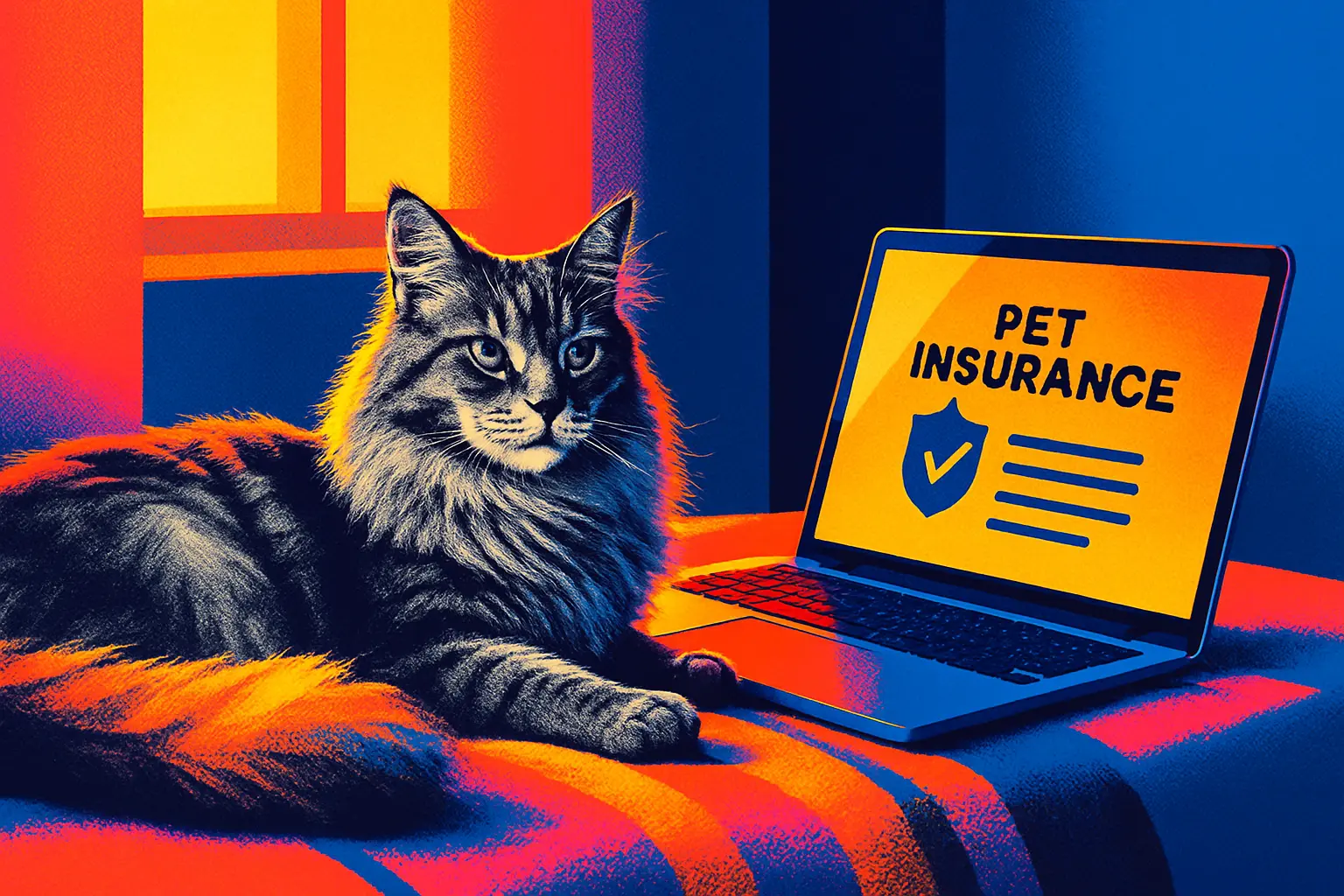
A straightforward guide to protecting your cat
Cat insurance is a policy that helps pay for unexpected veterinary costs when your cat becomes ill or injured. It is not a savings plan and it will not cover everything, but it can protect you from large, unplanned bills. With UK veterinary costs rising and treatments becoming more advanced, more owners are choosing to insure their cats. Over 1.3 million cats in the UK now have insurance, reflecting a shift from the days when most cats went uninsured.
Average monthly premiums for cats are typically lower than for dogs, often around the £8 to £12 mark depending on policy type and your cat’s details. Some breeds cost more to insure due to known health risks. In 2025, Maine Coons had the highest average monthly premiums at over £13, slightly above Norwegian Forest cats at around £12.80. Understanding these differences helps you budget with eyes open.
Insurance can reduce the financial impact of large vet bills. UK insurers paid out a record £1.23 billion in pet insurance claims in 2024, with cats accounting for £232 million. The average claim across pets sits around £685, a useful benchmark for how quickly fees can add up. This guide explains how cat insurance works, what it covers, where the gaps are, and how to compare options safely so you can choose a policy that genuinely fits your needs.
No jargon, no pressure. Just clear, UK-focused guidance to help you make a confident, informed choice.
What is covered and how it typically works
Most policies are designed to pay for eligible veterinary treatment when your cat is injured or becomes ill. This usually includes consultations, diagnostics like blood tests or scans, medicines, surgery, and follow-up care. Some policies include dental treatment for accidents or disease, and third party liability for damage your cat causes outside your home. Routine care such as vaccinations and neutering is generally not covered.
You will choose a policy type: accident-only, time-limited, maximum benefit, or lifetime. Lifetime cover is designed to renew cover for ongoing conditions each year, subject to annual limits and continuing eligibility. Time-limited and maximum benefit policies cap cover for a condition by time or by a fixed pot. Pre-existing conditions are commonly excluded, and waiting periods usually apply when you start a policy.
Claims are usually submitted online or via your vet. Some brands pay most claims quickly; for example, some UK providers report the majority settled within five working days. A typical journey might involve paying your excess and either settling the full bill then being reimbursed, or asking your vet to be paid directly by the insurer. If your cat swallows a foreign object and needs surgery, the policy could help with hospital fees and aftercare, subject to your cover limits and excess. If your cat develops a long-term condition like diabetes, only lifetime cover is likely to keep paying for ongoing treatment at renewal, assuming the policy remains active and the terms are met.
Always check exclusions, excesses, and annual or per-condition limits before buying.
Who is likely to benefit
Cat insurance suits owners who want predictable budgeting and protection from large surprise bills. It can be especially helpful for pedigree breeds with known health risks, outdoor cats with a higher chance of injury, and owners who prefer access to advanced diagnostics or referral specialists without delaying care for cost reasons.
If you have significant savings set aside, a higher excess or a more limited policy might be reasonable. Indoor mixed-breed cats with few risk factors may be cheaper to insure, and some owners weigh the cost against the likelihood of claims. Insurance is not right for everyone. If you cannot maintain premiums over time, or if your cat already has conditions you are comfortable self-funding, you may decide not to buy. The key is choosing an approach that safely fits your situation.
Cover levels at a glance
-
Accident-only
- Covers: Injuries from accidents. Often includes X-rays, surgery, and emergency care.
- Limits: Low annual caps; no illness cover.
- Who it suits: Tight budgets needing basic safety net.
-
Time-limited
- Covers: Accidents and illnesses for a set period (often 12 months from first treatment).
- Limits: Cover ends when the time window or limit is reached.
- Who it suits: Short-term affordability with awareness of end dates.
-
Maximum benefit (per condition pot)
- Covers: Accidents and illnesses up to a fixed pot per condition, no time limit.
- Limits: Payout stops when the pot is used, even across multiple years.
- Who it suits: Owners wanting flexibility without lifetime pricing.
-
Lifetime
- Covers: Accidents and illnesses with an annual limit that resets at renewal.
- Limits: Annual vet fee cap; must keep policy active; terms can change at renewal.
- Who it suits: Those seeking long-term support for chronic conditions.
-
Common add-ons
- Dental disease cover: Beyond accidents, often with preventive care proof.
- Overseas travel: Treatment while temporarily abroad, subject to rules.
- Third party liability: Damage your cat causes to others’ property.
- Complementary therapy: Physiotherapy or behavioural treatment with vet referral.
Lifetime cover offers the most consistent protection for ongoing conditions, but it also tends to cost more each year.
Pricing and what influences it
| Item | Typical UK range | What to know |
|---|---|---|
| Average monthly premium | About £8 to £12 | Cats usually cost less than dogs on average; brand and cover matter. |
| Policy type | ~£3 accident-only to ~£8.68 max benefit | Lifetime typically higher; benefits and limits vary widely. |
| Breed | £6 to £13+ | Maine Coon over £13 on average; Norwegian Forest about £12.80; Persian often cheaper. |
| Age | Kittens ~£6.80 vs cats 3-4 years ~£5.99 | Younger cats can rate higher initially; older cats increase as risk rises. |
| Annual total | Roughly £124 to £145 | Varies with excess, limits, postcode, and optional extras. |
| Market trend | Modest rises in 2025 | Premiums stabilised then edged up; locking cover early may help. |
| Claims environment | Average claim ~£685 | High treatment costs drive pricing and terms. |
Prices are indicative, not guarantees. Insurers assess risk using your cat’s details, cover choices, and claims history.
Can you apply and what insurers ask for
Most UK residents can apply for cat insurance once their kitten is old enough, often from eight weeks. Some insurers cap new policy entry for older cats, while others allow late entry with higher premiums or reduced options. You will be asked for your cat’s age, breed, sex, neuter status, and medical history, plus your address and contact details.
Insurers may require your cat’s microchip number, vaccination records, and recent vet notes to assess claims. Common reasons for decline include undisclosed pre-existing conditions, incomplete vaccination status where required, or mismatch between application details and vet records. Keeping records up to date and answering questions honestly helps avoid delays or disputes later.
From quote to claim in simple steps
- Gather your cat’s details and recent vet records.
- Get quotes online, adjusting limits, excess, and add-ons.
- Compare policy types and check exclusions line by line.
- Choose an affordable excess you can reliably pay.
- Buy the policy and note start date and waiting periods.
- Set up direct debit and store documents in one place.
- If treatment is needed, contact the insurer early.
- Submit claim forms and invoices promptly via your account.
Benefits and trade-offs to weigh
| Pros | Cons / Considerations |
|---|---|
| Helps cover large, unexpected vet bills and specialist care. | Pre-existing conditions are usually excluded from new policies. |
| Lifetime policies can support ongoing conditions at renewal. | Premiums and terms can change at renewal, especially after claims. |
| Cats cost less to insure on average than dogs. | Excess and co-payments reduce what you receive on claims. |
| Quick claims possible with some providers, often within days. | Product complexity can cause confusion and complaints if unchecked. |
| Broad market choice as UK pet insurance expands rapidly. | Slight premium increases expected as costs and claims rise. |
| Optional dental and liability cover available. | Waiting periods apply at the start; routine care not covered. |
Read this before you commit
Check exactly what counts as a pre-existing condition and how your excess works per claim or per condition per year. Review annual or per-condition limits alongside any sub-limits for diagnostics, dental, or complementary therapy. Look for waiting periods that delay illness cover at the start of the policy and understand how renewals handle ongoing conditions. Confirm vaccines, dental checks, and routine care requirements to keep cover valid. Ask about direct-to-vet payments, typical claim times, and documentation needed. Finally, budget for future years. Premiums may rise after claims or as your cat ages, so choose a level you can maintain long term.
Other routes worth considering
- Emergency savings fund: Useful if you prefer to self-insure smaller costs and accept higher risk for big bills.
- Accident-only cover: A budget option if illness cover feels unaffordable, with clear limits.
- Charitable support schemes: Limited help in hardship situations; not a substitute for insurance.
- Wellness plans from vets: Spreads routine costs like vaccines and flea treatment, but not insurance.
Common questions, answered clearly
Q: Are cats really cheaper to insure than dogs? A: Generally yes. Average monthly cat premiums are around half typical dog premiums. Costs still vary by breed, age, cover type, and claim history, so compare carefully.
Q: Which cat breeds are most expensive to insure? A: In 2025, Maine Coons averaged over £13 per month, slightly higher than Norwegian Forest cats. Mixed-breed and some Persian cats are usually cheaper, though individual quotes vary.
Q: How fast are claims paid? A: Many insurers aim to settle straightforward claims within days once documents are received. Some UK providers report paying most claims within five working days via online portals.
Q: What policy type protects long-term illnesses best? A: Lifetime cover is designed to renew treatment for ongoing conditions each policy year, subject to limits, eligibility, and continued premium payments.
Q: Will my premium go up after I claim? A: It can. Premiums and terms are reviewed at renewal based on overall costs, your pet’s risk profile, and market trends. Expect modest increases as the market stabilises.
Q: What if my cat already has a condition? A: Most insurers exclude pre-existing conditions. Some may consider cover after a symptom-free period, but this varies. Check the policy wording and ask before buying.
Q: Do policies cover dental care? A: Accident-related dental is common. Disease-related dental often requires an add-on and evidence of regular dental checks. Sub-limits and exclusions are typical.
What to do next
Take a few minutes to compare cover types side by side. Set a realistic budget, choose an excess you can afford, and read each policy’s exclusions carefully. When you are ready, get quotes from a few reputable UK insurers and keep notes of limits, waiting periods, and claim processes. Move at your own pace and only buy when the terms feel right for you and your cat.
Important information
This guide is general information, not personal financial advice. Policy terms, limits, premiums, and exclusions vary by insurer. Always read the full policy wording and check details with the provider before you buy.